Quick Facts
| Detail | Info |
| Topic | The Team Fortress 2 economic ecosystem: how goods are purchased, traded, and sold |
| Game | Team Fortress 2 (TF2) — free-to-play multiplayer shooter by Valve |
| Game launch | October 10, 2007 |
| Item trading introduced | 2010 — with the Mann-Conomy update |
| Primary official channel | Steam Community Market |
| Leading third-party sites | Marketplace.tf, Backpack.tf, Scrap.tf, STN-Trading, DMarket, Tradeit.gg |
| In-game currency | Keys (Mann Co. Supply Crate Keys), Metal (Scrap, Reclaimed, Refined) |
| Real money currency | USD (displayed across most third-party platforms) |
| Most valuable item tier | Unusual cosmetics — particle-effect hats worth hundreds or thousands of dollars |
| Second most sought | Australium weapons — gold-coloured rare drops |
| Trustpilot score (Marketplace.tf) | 4.1 out of 5 (1,300+ reviews as of 2025) |
| Key safety tool | Backpack.tf — price database and community valuation resource |
Introduction: An Outlived Game Economy
When Team Fortress 2 first launched in 2007, nobody was talking about it as a trading platform. It was a multiplayer shooter — a funny, colourful, team-based game where cartoon mercenaries blew each other up with rockets and flame throwers. The idea that it would one day host one of the most active item economies in gaming history would have seemed completely absurd.
And yet here we are, nearly two decades later, with a marketplace ecosystem so developed it has its own price databases, automated trading bots, browser extensions, dedicated Discord communities, and third-party sites processing millions of dollars in real-money transactions every year.
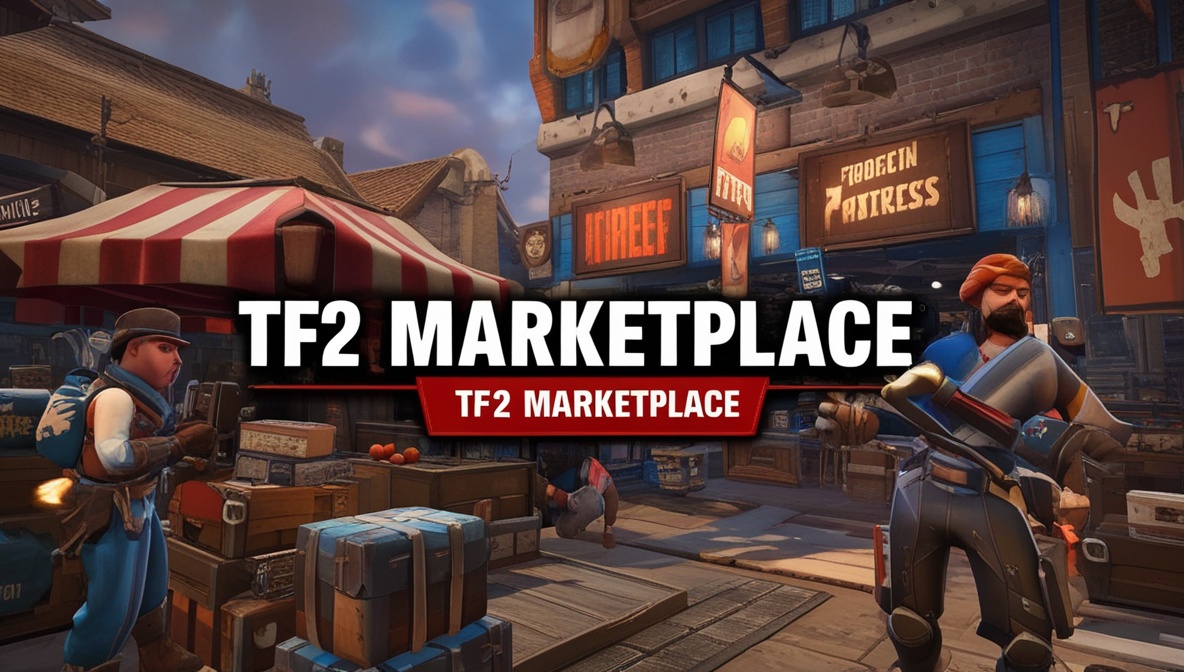
The TF2 marketplace is genuinely fascinating — not just as a gaming curiosity but as a case study in how player communities build economic infrastructure around something that started as simple game drops. This article covers everything about how that ecosystem works, where it came from, what the main platforms are, how to use them safely, and what the whole thing is worth right now.
See also “GlobalUnpaid com: Exploring the Website, Its Purpose, and User Experience“
How It All Started: The Mann-Conomy Update
Team Fortress 2’s item economy didn’t exist at launch. The game shipped as a standard multiplayer shooter where everyone had access to the same weapons. Items were cosmetic or class-specific unlocks earned through gameplay, not traded commodities.
That changed in September 2010 with what Valve called the Mann-Conomy Update. It was one of the most significant additions in the game’s history, introducing an in-game store, a crafting system, item drops, and — most importantly — the ability for players to trade items directly with each other.
The ripple effects were enormous. Almost immediately, players began assigning value to different items. Some were common. Some were rare. Some had unusual particle effects that made them dramatically more visually impressive. The community started working out what everything was worth, and informal price guides began appearing on forums.
In a few of months, metal and keys became the player economy’s de facto currencies. Mann Co. Supply Crate Keys — used to open mystery crates containing random items — became the primary unit of high-value exchange. Metal, crafted by combining unwanted weapons, handled smaller transactions. This dual-currency system was entirely player-invented. Valve simply provided the items and the trade interface.
The Unusual system deserves particular mention. Unusual items are rare-quality cosmetics — primarily hats — that display animated particle effects. They can fall from the sky, burst into flames, orbit with planets, or crackle with electricity. Because they’re rare and visually distinctive, they became the prestige tier of TF2 items, with some commanding prices of hundreds or thousands of dollars in real-world value. A single Unusual hat in peak condition with a desirable effect could represent a significant financial investment.

The Ecosystem Grows: From Forums to Full Platforms
As the economy grew, the community’s infrastructure kept pace. Players needed better tools than forum posts and manually negotiated trades.
Backpack.tf emerged as the central valuation tool. It’s not a marketplace in the traditional sense — you can’t buy or sell directly through it. Instead, it functions as a comprehensive price database, pulling community-reported valuations across thousands of items and presenting them in a searchable format. When a player wants to know what a particular Unusual hat is worth, they check Backpack.tf. When a seller wants to know if an offer is fair, they check Backpack.tf. It became the reference standard that the entire trading community trusted, built from community-submitted price data rather than any single authority.
Backpack.tf also allows you to view any player’s public inventory, see what items they own, and check whether those items match the valuations in the price database. For experienced traders evaluating a potential deal, this is invaluable. It catches attempts to pass off low-value items as high-value ones, and it gives both sides of any negotiation a shared reference point.
Marketplace.tf took a different approach. Where Backpack.tf is a valuation tool, Marketplace.tf is an actual buying-and-selling platform built around real money rather than in-game currency. Sellers list items at USD prices. Buyers pay with real money through Steam Wallet. The platform holds payment in escrow until the item is successfully delivered to the buyer’s Steam inventory, which significantly reduces fraud risk on both sides.
Marketplace.tf built a substantial user base on the back of several advantages over the Steam Community Market. Faster delivery, broader item selection, and more stable pricing in real-money terms made it the go-to platform for players who wanted to spend or receive actual currency rather than in-game metal and keys. Its Trustpilot score of 4.1 out of 5 from over 1,300 reviews reflects a generally positive user experience, with most complaints relating to customer support response times rather than item delivery failures.
Scrap.tf serves a different segment of the market. It’s built around automated bot-driven trades — you select the items you want, the bot fulfils the order, and the transaction completes without any need to negotiate with another player. This makes it fast and convenient for bulk trades and lower-value exchanges. Critics note that prices are often less favourable than peer-to-peer trades through Backpack.tf, but the speed and simplicity attract players who value convenience over maximum value.
DMarket is a newer player in the space, distinguished by its multi-game support. Rather than focusing exclusively on TF2, it handles items from CS2, Dota 2, Rust, and other titles alongside TF2, which gives it a broader audience and more liquidity in its marketplace. For TF2 traders, it offers verified transactions and price tracking tools alongside its buying and selling functionality.
STN-Trading focuses on automated bulk trading and is particularly useful for players looking to move large quantities of common items quickly. It operates on a bot-driven model similar to Scrap.tf but with different inventory focuses and pricing structures.
How the Currency System Actually Works
This is where many new TF2 traders get confused, so it’s worth explaining clearly.
TF2’s item economy runs on two parallel systems that sometimes intersect and sometimes operate completely independently.
The in-game currency system uses keys and metal. Refined Metal — the highest tier of in-game metal, crafted from nine pieces of Scrap Metal — is the smallest meaningful unit. Keys are worth several Refined Metal each and serve as the standard unit for mid-range to high-range item trades. Items are usually valued in keys when two players engage in direct trade negotiations.
The real-money system runs primarily through the Steam Community Market and third-party platforms like Marketplace.tf. When items are listed here, prices appear in USD (or your local currency equivalent via Steam’s conversion). The exchange rate between keys and USD fluctuates with market conditions.
What makes this interesting is that the two systems are connected but not equivalent. The Steam Community Market charges a 15% fee on every sale — 5% to Valve and 10% to the game’s developer. Third-party platforms like Marketplace.tf charge lower fees and allow more direct pricing control. Players who want to convert in-game wealth to real money find the fee structures matter enormously.
Keys themselves fluctuate in USD value based on supply, demand, and how many crates Valve releases in any given update cycle. A major update that floods the game with new crates increases demand for keys, which pushes their price up. Extended quiet periods can soften demand.
It’s crucial to realize that, unless you specifically use sites that permit currency withdrawals, money collected through Marketplace.tf or in the Steam Community Market remains within the Steam ecosystem. Many third-party platforms pay out to Steam Wallet rather than bank accounts, which is a meaningful limitation for traders who think of TF2 items as a way to generate real spendable income.
What Items Are Actually Worth Trading
Not every TF2 item is worth the time to trade. The economy has a clear hierarchy, and understanding where different items sit in that hierarchy saves a lot of frustration.
Unusuals sit at the very top. These are rare cosmetics — overwhelmingly hats and miscellaneous items — with animated particle effects applied. The combination of the base cosmetic and the specific particle effect determines the price. Popular effects on desirable hats can push values into the hundreds or thousands of dollars. Less popular effects on common hats might only be worth a few keys. Learning which effects are considered desirable is a significant part of becoming an effective Unusual trader.
Australium weapons are the second prestige tier. Only Advanced and Expert Mann Up Mission drops contain these golden-colored versions of normal weaponry. They’re visually impressive and universally recognised as status symbols. Their value is more consistent than Unusuals because the desirability is clearer, but they’re still individually worth meaningful real-world money.
Strange weapons and cosmetics track kill counts (or other statistics) and display them on the item. Strange quality items in appealing categories — particularly those with high tracked counts or specific Strange parts attached — have collector markets. Less exciting Strange weapons are essentially commodity items worth small amounts.
Keys and metal are the liquid currency of the economy rather than collectible items in their own right. They’re worth trading as a medium of exchange rather than for their own sake.
Low-end cosmetics and common crafting supplies are typically worth very little on their own, but they can be moved in bulk through platforms like Scrap.TF is a popular place for players to start. just getting started.

Keeping Yourself Safe: Essential Information
The TF2 marketplace has been the target of scams for as long as it has existed. Understanding the most common risks protects your items and your money.
Trade offer fraud is the most common attack. A scammer sends a trade offer that appears to include valuable items but actually substitutes look-alike cheaper items at the last moment. Always verify each item individually before accepting any trade. Backpack.tf links let you check the exact quality and attributes of any item before it changes hands.
Phishing and fake site links appear regularly in community spaces. Links that lead to pages that steal credentials yet appear to be Backpack.tf or Marketplace.tf pose a constant risk.Bookmark the legitimate sites and navigate directly rather than clicking links from unknown sources.
Social engineering through trust trades, loan requests, or middleman scams targets players who’ve built community reputations. If someone you don’t know personally is asking you to trust them with valuable items without a platform’s escrow protecting the transaction, the answer should be no.
Escrow platforms are your best protection. When buying or selling through Marketplace.tf, the escrow system holds funds until the item is confirmed delivered. This protects both buyer and seller. The Steam Community Market offers similar protection within its own ecosystem. Peer-to-peer trades without escrow carry more risk and should be approached with careful item verification.
Enabling Steam Guard Mobile Authenticator adds another layer of protection to your Steam account. Items and purchases require confirmation through the authenticator app, which blocks unauthorised access even if your password is compromised.
The Market in 2025 and 2026: Is TF2 Trading Still Active?
The honest answer is yes — more than most people outside the community expect.
Team Fortress 2 has been free to play since 2011 and continues to attract hundreds of thousands of concurrent players despite being nearly two decades old. The item economy remains active and liquid. New players enter the trading scene regularly, and the collector market for high-end Unusuals and Australiums continues to function.
That said, the landscape has shifted. Valve’s attention to TF2 has been inconsistent, and major updates that historically drove market activity — new Unusual effects, new cosmetics, new crate releases — have been less frequent. The bot problem in the game’s servers, which peaked around 2022 with massive numbers of automated accounts disrupting gameplay, briefly affected the game’s active community before Valve took steps to address it.
Third-party trading platforms have adapted. DMarket’s multi-game model means TF2 items trade alongside CS2 and other game inventories on a single platform, which can create more liquidity. Marketplace.tf’s user reviews in 2025 consistently describe it as reliable and well-maintained. Backpack.tf remains the community standard for price checking.
For players with established inventories of Unusuals or Australiums, the market remains functional. For new players trying to get started, the entry point is lower than it’s ever been since everything you need to understand the economy — pricing tools, trading forums, automated bots — is free to access.
Final Words
The TF2 marketplace is one of gaming’s great unexpected stories. A team shooter shipped in 2007 quietly grew one of the most sophisticated player-driven economies in the history of digital entertainment. Hats — yes, hats — became speculative assets. Keys became currency. Community volunteers built price databases more reliable than anything Valve itself provided. Third-party platforms turned digital cosmetics into real-money transactions processed securely at scale.
It didn’t happen because Valve planned it that way. It happened because the TF2 community decided this was what they wanted to do with the tools Valve gave them — and then built the infrastructure to make it work.
Whether you’re a new player trying to understand what all those coloured items in your first crate drop are worth, a collector building a museum-quality backpack of Unusuals, or simply curious about how a 17-year-old game maintains a living economy — the TF2 marketplace rewards understanding. Learn how the currency works. Use Backpack.tf for pricing. Use escrow-protected platforms for real-money transactions. Verify everything before accepting any trade.
The economy is quirky, occasionally chaotic, and genuinely fascinating. It’s also, for the players who understand it, a lot of fun.
See also “GlobalUnpaid com: Exploring the Website, Its Purpose, and User Experience“
FAQs
1. What is the TF2 marketplace?
It refers to the ecosystem of platforms and tools that allow Team Fortress 2 players to buy, sell, and trade in-game items. This includes Valve’s own Steam Community Market, third-party platforms like Marketplace.tf, valuation tools like Backpack.tf, and bot-driven services like Scrap.tf and STN-Trading.
2. What currency does the TF2 marketplace use?
Two parallel systems. The in-game economy uses Keys (Mann Co. Supply Crate Keys) and Metal (Scrap, Reclaimed, Refined) as currency for direct player-to-player trades. Real-money platforms like Marketplace.tf and the Steam Community Market display prices in USD, converted to your local currency by Steam.
3. What is Backpack.tf and why does everyone mention it?
Backpack.tf is the community’s primary price database and item valuation tool. It aggregates community-reported prices across thousands of items and allows you to check any player’s public inventory. It’s the reference standard for knowing what items are worth, though it doesn’t support buying or selling directly.
4. What is Marketplace.tf?
Marketplace.tf is the leading third-party platform for real-money TF2 item transactions. Sellers list items at USD prices, buyers pay through Steam Wallet, and the platform holds funds in escrow until delivery is confirmed. It has a Trustpilot score of 4.1 from over 1,300 reviews and is widely considered the most reliable dedicated TF2 marketplace.
5. What are Unusual items and why are they so valuable?
Rare-quality cosmetics with animated particle effects, primarily hats, are considered unusual products. The combination of a desirable base item and a popular particle effect creates high demand. Common Unusuals are worth a few keys, but more expensive ones might cost hundreds or thousands of dollars.
6. What are Australium weapons?
Gold-coloured variants of standard TF2 weapons, available only through Mann Up Mission drops in Mann vs. Machine mode. They’re visually distinctive, universally recognised as status symbols, and command meaningful real-world market values.
7. How does Scrap.tf work?
Scrap.tf is a bot-driven automated trading platform. You select the items you want, the bot delivers them, and the trade completes without needing to negotiate with another player. Although it’s quick and easy, peer-to-peer trades using Backpack typically give better prices.tf.
8. What fees does the Steam Community Market charge?
Steam takes a 15% fee on every transaction through the Community Market — 5% to Valve and 10% to the game developer. Third-party platforms typically charge lower fees, which is one reason serious traders often prefer them for high-value transactions.
9. What are the most common TF2 trading scams to watch out for?
Trade offer substitution (replacing valuable items with look-alikes at the last moment), phishing links designed to steal Steam credentials, and social engineering through trust trades or loan requests. Always verify each item individually before accepting any trade, bookmark legitimate sites directly, and use escrow-protected platforms for real-money transactions.
10. Is TF2 trading still active in 2025?
Yes. Despite the game’s age, the item economy remains active. Unusuals and Australiums continue to trade at significant values, new players enter the market regularly, and third-party platforms like Marketplace.tf and DMarket reported healthy activity through 2025. The community is smaller than at peak but remains engaged.
11. Can I turn TF2 items into real money I can spend outside Steam?
It depends on the platform. Funds from the Steam Community Market remain Steam Wallet credit. Marketplace.tf also pays to Steam Wallet. Some platforms offer external cash withdrawal options, but these typically involve additional fees and verification steps. Research the specific withdrawal options of any platform you use before treating TF2 trading as income generation.
12. How should a new player get started with TF2 trading?
Start by making your Steam inventory public, then create a Backpack.tf account to see what your existing items are worth. Learn the key-to-metal conversion rates and what items fall in which tier. Use Scrap.tf for quick low-value exchanges to get started. For anything of significant value, use escrow-protected platforms and verify every item before accepting a trade.