Robert Fuller Actor: Biography, Career Highlights, Family, and Legacy
Quick Bio
| Detail | Info |
| Full Name | Leonard Leroy Lee (born); Robert Simpson Jr. (childhood); Robert Fuller (stage name) |
| Nickname | “Buddy” |
| Born | July 29, 1933, Troy, New York, USA |
| Nationality | American |
| Occupation | Actor (retired); horse rancher |
| Years Active | 1952–2001 |
| Known For | Jess Harper on Laramie; Cooper Smith on Wagon Train; Dr. Kelly Brackett on Emergency! |
| Spouse(s) | Patricia Lee Lyon (married 1962, divorced 1984; deceased 1994); Jennifer Savidge (married 2001–present) |
| Children | Rob Fuller Jr., Christine Fuller, Patrick Fuller |
| Height | 5 ft 11 in |
| Residence | Gainesville, Texas |
| Estimated Net Worth | Approximately $2 million |
Introduction
There’s a particular kind of American actor who doesn’t get talked about much anymore — someone who showed up week after week on your television screen, made you believe completely in the character they were playing, and kept doing it for decades without a single scandal or Hollywood breakdown. Robert Fuller is exactly that kind of actor.
From the late 1950s through the 1970s, if you owned a television set and watched it regularly, you knew this man’s face. He rode across the Wyoming plains as the brooding drifter Jess Harper on Laramie. He scouted the frontier trails as Cooper Smith on Wagon Train. He barked urgent medical orders as Dr. Kelly Brackett on Emergency! Three separate iconic series. Three different decades. Three entirely different characters. And through all of it, the same grounded, ruggedly authentic presence on screen that made audiences trust him completely.
What makes Robert Fuller genuinely interesting, though, isn’t just his television career. It’s the whole arc of his life — a boy born with one name, raised under another, who dropped out of school at fourteen, arrived in Hollywood at sixteen with nothing but nerve and physical ability, and spent the next fifty years building something remarkable out of sheer persistence and talent. And then, when the cameras stopped rolling for the last time, he traded Los Angeles for a horse ranch in Texas and never once looked back.
Early Life and Childhood
The man the world came to know as Robert Fuller arrived in this world on July 29, 1933, as Leonard Leroy Lee — a name almost nobody ever called him, even from the beginning. His mother, Elizabeth Lee, was a dance instructor by trade, and she raised young Leonard largely on her own through his very early years. Before he was born, his mother had briefly been married to a naval officer named Robert Simpson Sr., and when she eventually remarried Simpson, the boy took his stepfather’s surname and became Robert Simpson Jr. Friends and family skipped both names and simply called him Buddy — and that nickname stuck all the way through his Florida years.
In 1939, when Buddy was six years old, the family packed up and left New York. They landed in Key West, Florida, a sun-drenched island city at the very southern tip of the continental United States. It was about as far from Troy, New York as you could get without leaving the country, and it suited the family well. His mother and stepfather eventually opened a dance school there together — she taught ballet to local children during the day, and the two of them offered ballroom instruction to the waves of Navy personnel stationed in Key West each evening. The place was practically surrounded by sailors.
Growing up above a dance studio meant young Buddy absorbed performance almost by osmosis. He became an accomplished dancer. He also developed the kind of physical confidence and body awareness that would serve him enormously well once he started working as a stuntman years later. The family wasn’t wealthy, but the household was active and creative, shaped by rhythm, movement, and the particular energy of a military town in wartime and post-war Florida.
The family also had a year in Chicago somewhere along the way — his stepfather’s naval career created a nomadic quality to Buddy’s childhood that meant he never spent too long in any single school. He attended Miami Military Academy for fifth and sixth grade, then Key West High School for ninth grade. That was where his formal education ended. He was around fourteen, he openly admitted he wasn’t doing well academically and genuinely disliked being there, and he walked out. No diploma, no GED. Just out.
Education: What Happened Instead of School
It would be easy to look at Robert Fuller’s decision to leave school at fourteen and see a cautionary tale. It was anything but. The education he got after leaving was more practical, more varied, and ultimately more useful to his future than anything a classroom would have given him.
When his family relocated to Hollywood in 1950 — Buddy was sixteen — his first job was working as a stuntman. Not an aspiring actor haunting casting calls and handing out headshots. A stuntman. Someone who showed up, did physically dangerous things on camera, got paid, and went home. He was good at it. His dancing background gave him unusual body control for a teenager, and his natural athleticism did the rest.
He eventually wound up working at Grauman’s Chinese Theatre on Hollywood Boulevard, the legendary venue famous for its celebrity handprints in cement. He worked his way up to assistant manager there by his late teens. In between, he worked whatever odd jobs came his way.
The real turning point in his self-education as an actor came through his friendship with actor Richard Boone, who recognized something in the young man and took him seriously enough to work with him. After a period of study with Boone, Boone was impressed enough to recommend Fuller to Sanford Meisner — one of the most influential acting teachers in American history — who accepted him into New York’s Neighbourhood Playhouse School of Theatre. That’s where Robert Fuller learned to act properly. Not from a high school drama class, but from one of the great masters of the craft.
He also served in the United States Army during the Korean War era, which interrupted his early Hollywood momentum for a stretch but added to the personal depth and toughness that would eventually make his screen presence so believable.
Career Beginnings and the Long Climb Up
When Fuller returned to Hollywood after his military service and his acting studies, the grind began in earnest. He started exactly where most actors start — at the absolute bottom, doing extra work and uncredited appearances in whatever came along. He can be spotted, if you look hard enough, in enormous productions from the early to mid-1950s. Cecil B. DeMille’s The Ten Commandments. Above and Beyond. The kinds of movies where nobody knows your name yet but you’re grateful to be in the frame.
His friend Chuck Courtney — an actor he’d known for years — was the one who finally helped Fuller break through to something real. Courtney was set to star in a low-budget 1957 film called Teenage Thunder and brought Fuller in for a role. The two of them even choreographed their own fight scene to show the director what they could do. It was small, it was scrappy, and it worked. Fuller had his first starring film credit.
That same year, he appeared in a science fiction picture called The Brain from Planet Arous — not exactly prestigious cinema, but it kept his name moving through the industry and his face appearing in front of audiences. He guest-starred on television Western programs throughout the late 1950s, slowly building a reputation as someone reliable, watchable, and genuinely comfortable on horseback.
The guest-starring circuit wasn’t glamorous, but it was enormously important in that television era. Every appearance was an audition of sorts. Every role was a chance to be noticed by someone who mattered.
The someone who mattered turned out to be working on a show called Cimarron City. Fuller appeared in an episode, and his performance there caught the eye of Patrick Kelly, the Vice President of Talent at Universal Studios. Kelly called him in. He had a new half-hour Western in development called Laramie, and he had a part for Fuller — the role of Slim Sherman, the steady, responsible rancher at the heart of the story.
Fuller said no.
He wanted to play the other character. The drifter. The restless, magnetic outsider named Jess Harper who blew into town and never quite left. They went back and forth. Kelly held firm. Fuller held firmer. Eventually, Kelly gave in. Jess Harper it was.
It was one of the most consequential stubbornnesses in television history.
Major Achievements: Three Shows, Three Legends
Laramie (1959–1963)
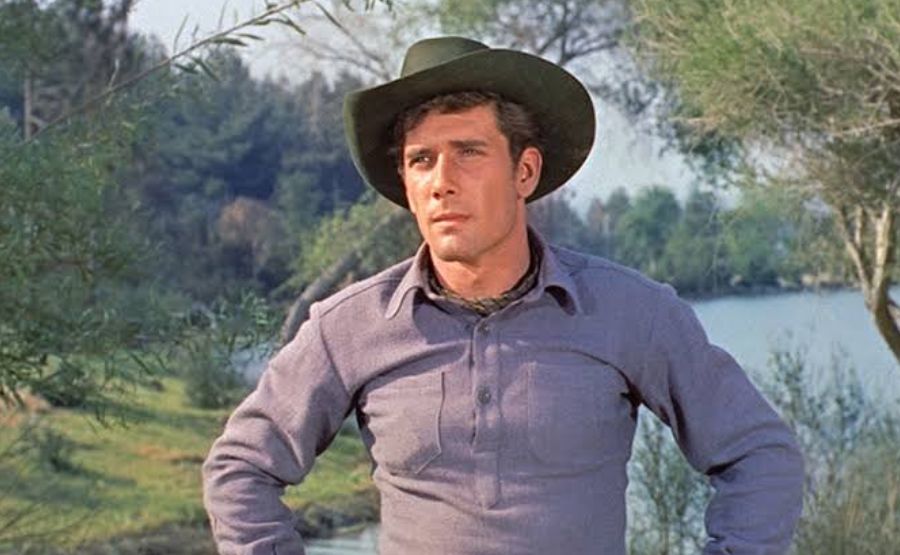
Laramie premiered in the autumn of 1959 on NBC, and it quickly became something nobody had quite predicted: an international phenomenon. In contrast to his real-life best buddy John Smith, who portrayed Slim Sherman—the exact role Fuller had declined—Fuller portrayed Jess Harper. The irony of that casting swap played out beautifully on screen. Their genuine friendship gave the partnership between the two characters a warmth and authenticity that audiences responded to immediately.
The show ran for four seasons. By the time it ended in 1963, it had aired in more than seventy countries. Fuller received a personal honor from Emperor Hirohito of Japan because of Laramie’s enormous popularity there — an extraordinary distinction for an American television actor at that time. The show made him a legitimate star not just in the United States but across Europe and Asia in a way that very few American television performers achieved in that era.
Wagon Train (1963–1965)
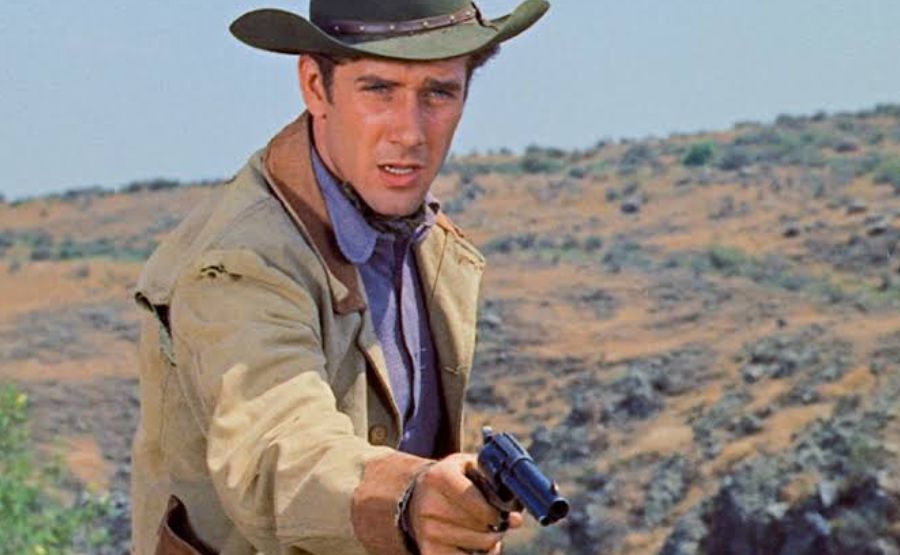
When Laramie wrapped, Fuller moved immediately into another Western institution. Wagon Train was already an established hit, and Fuller joined its cast as Chief Scout Cooper Smith for the show’s final two seasons. He worked alongside John McIntire, one of the most respected character actors in Hollywood, and brought the same dependable authority to the scout role that he’d brought to Jess Harper.
He was always clear in interviews that he didn’t come in to replace Robert Horton, the actor who had originated the scout character — Horton had actually left the show a full year before Fuller arrived, and the two men were old friends who’d known each other since 1954. The remarkable footnote: Horton and Fuller shared the exact same birthday, July 29, nine years apart.
Emergency! (1972–1977)
The Western era faded in the late 1960s, and Fuller’s feature film work during that period was mixed — his role as Vin in Return of the Seven, the 1966 sequel to The Magnificent Seven, gave him his most prominent big-screen credit, but the film itself was critically dismissed. The Hard Ride in 1971 showed he could handle gritty contemporary material, but nothing caught fire the way the television Westerns had.
Then producer Jack Webb came calling. Webb wanted Fuller to play Dr. Kelly Brackett, the chief of emergency medicine at a fictional Los Angeles hospital, in a new medical action drama. Fuller said no. Webb came back. Fuller said no again. Webb came back a third time and refused to take the answer. Fuller finally relented.
Emergency! premiered in 1972 and ran until 1977, with six television movies following afterward. It starred Fuller alongside Julie London and her husband Bobby Troup, two of his close friends, which made the workplace dynamic unusually warm and genuine. The show did something remarkable: it helped legitimize and popularize the paramedic profession across the United States. Emergency medical services advocates have directly credited Emergency! with helping drive public support and legislative action that expanded paramedic programs nationwide. Fuller had stumbled into a role with real-world consequences beyond entertainment.
The three-show legacy is genuinely unusual in American television history — an actor anchoring a beloved series in three completely different decades, across three completely different genres, with devoted fan bases that have outlasted the original broadcasts by generations.
Personal Life
Robert Fuller married Patricia Lee Lyon on December 20, 1962, while Laramie was still on the air and at the peak of its popularity. Patricia — known as Patty — had a background in entertainment herself, with a handful of television credits to her name. Together they had three children: Rob Jr., Christine, and Patrick. The marriage lasted twenty-two years before ending in divorce in 1984. Patty Lyon died of cancer ten years later, in 1994.
For years after the divorce, Fuller remained largely private about his personal life. Then, on May 19, 2001 — the same year he made what would turn out to be his final acting appearance — he married Jennifer Savidge, an actress best known to television audiences for her years playing Nurse Lucy on the acclaimed medical drama St. Elsewhere, as well as recurring appearances on JAG. The two had become close over time, and their marriage was described by those around them as genuinely happy and well-matched.
Through Jennifer’s professional world, Fuller became close friends with Norman Lloyd, the legendary actor and producer who played Dr. Daniel Auschlander on St. Elsewhere — a man who worked in Hollywood across an almost incomprehensibly long span of decades. Fuller’s social world, even in retirement, remained connected to the entertainment community through his wife.
The couple relocated from Los Angeles to a horse ranch in Gainesville, Texas, in 2004. The move was encouraged in part by Fuller’s neighbor and longtime friend Alex Cord, a fellow actor who had been urging Fuller to come to the area. The Texas ranch gave Fuller exactly what he’d always wanted: land, horses, open space, and a life that matched the values he’d spent decades portraying on screen.
Challenges and Difficult Periods
The most genuinely difficult stretch of Fuller’s career came in the late 1960s and early 1970s, when the American appetite for Westerns collapsed almost overnight. The genre that had made him a star simply stopped being produced at the same scale. Feature films in that era were moving toward grittier, more urban, more politically charged material — not the frontier mythology that had been Fuller’s home for a decade.
His film work during those years was sporadic and not particularly well-received. Return of the Seven got poor critical notices despite the built-in brand recognition of The Magnificent Seven. Fuller was a genuine talent in a genre that was being left behind by cultural change, and there wasn’t much he could do about it except keep working and wait.
He did keep working. The discipline and persistence that had gotten him from teenage stuntman to television star kicked in again. The Hard Ride in 1971 showed genuine range — a motorcycle drama that had nothing to do with cowboys or frontier trails. And then Jack Webb’s persistence about Emergency! pulled him back to the top tier of American television, which is where he stayed for another full decade.
The other challenge that surfaces in his personal story is the loss of his first wife to cancer in 1994, a decade after their divorce. Whatever their marriage had been, she was the mother of his three children, and her loss at a relatively young age cast a shadow over that chapter of his life.
Financial Situation and Net Worth
The honest answer on Robert Fuller’s net worth is that nobody outside his own household knows the precise figure, and the numbers floating around various celebrity finance websites contradict each other in ways that should make anyone skeptical. Estimates range from $2 million to $6 million across different sources, which is a gap wide enough to suggest nobody is working from verified financial documents.
What can be said with reasonable confidence: Fuller worked steadily in American television and film for roughly fifty years. He anchored three major network series across three decades, worked in feature films, and appeared in approximately ninety-five television and film productions over his career. That kind of sustained professional output generates meaningful income over time, particularly when the shows involved were genuine ratings successes.
The most conservative and widely cited estimate is around $2 million, which Celebrity Net Worth has published. That figure is plausible for a character actor who never crossed into film superstardom but had genuine, sustained television success. He is not wealthy by Hollywood’s top-tier standards. He is also clearly not struggling — the horse ranch in Gainesville, Texas, is a real operational property, not a weekend hobby.
What matters more than any specific number is how Fuller has chosen to use whatever he accumulated: a working ranch, a quiet life with his wife, horses, fishing, shooting, and the occasional appearance at Western heritage festivals where fans still line up to shake his hand and tell him what Jess Harper meant to them.
Current Activities and Life Today
Robert Fuller turned ninety-three years old on July 29, 2026. He lives on his horse ranch in Gainesville, Texas, with his wife Jennifer Savidge. He has been retired from acting since 2001 — he’s been consistent about that date in interviews, noting that his final role was a wonderfully full-circle appearance on Walker, Texas Ranger, where he played Wade Harper, written as the great-great-grandson of Jess Harper, the character he originated nearly four decades earlier.
He attends Western heritage conventions and fan events periodically, where his presence draws enormous warmth from audiences who grew up watching him on television in the 1960s and 1970s. He tells stories about his career with evident pleasure and remains sharp and engaged when he does appear publicly.
The ranch is his primary focus. He raises horses — a passion he carried his entire life, from the days he spent on horseback filming Laramie in the California hills to the daily rhythms of a working Texas property. He fishes. He shoots. He spends time with Jennifer. By every account, it is a life he genuinely loves rather than one he settled for.
Final Words
There’s something deeply satisfying about Robert Fuller’s story when you step back and look at the whole arc. A kid born with one name, raised under another, growing up in a dance school in Key West with no diploma and no obvious path to anything — who ends up anchoring three beloved American television series across three different decades, getting personally honored by a Japanese emperor, and helping spark a national conversation about emergency medicine simply by showing up and doing good work on a TV show he didn’t even want to be in.
He never became a movie star in the conventional sense. He never won an Emmy. He was never the subject of fevered tabloid attention or career-defining controversy. What he was, consistently and reliably across fifty years, was good at his job, present on screen in a way that audiences trusted, and unwilling to take roles that didn’t feel right to him — a stubbornness that cost him the role of Slim Sherman on Laramie and won him Jess Harper instead, which tells you everything you need to know about his instincts.
The Texas ranch and the quiet life that followed his 2001 retirement don’t feel like a retreat. They feel like the destination he was always heading toward — the real-life version of the Western values he spent his career portraying. Grit, authenticity, a deep relationship with the land and with horses, and a preference for doing meaningful things over chasing attention.
Robert Fuller never broke into the conversation about the all-time greats of American cinema. But in the particular corner of American entertainment he called home — the television Western, the procedural drama, the kind of show families watched together on Friday nights — he was about as good as it got.
FAQs
1. What is Robert Fuller’s real name?
He was born Leonard Leroy Lee. Growing up in Florida after his mother remarried, he went by Robert Simpson Jr. He adopted the stage name Robert Fuller when he joined the Screen Actors Guild at the start of his professional acting career.
2. Where was Robert Fuller born and raised?
He was born in Troy, New York, on July 29, 1933, but spent most of his formative years in Key West, Florida, where his mother and stepfather ran a dance school. He arrived in Hollywood at age sixteen when the family relocated there in 1950.
3. Why did he drop out of school?
He left Key West High School after ninth grade, around age fourteen, because by his own account he disliked school and wasn’t doing well there academically. He then went on to develop his craft through practical work, military service, and eventually formal study at the Neighbourhood Playhouse School of Theatre in New York.
4. What was his very first job in Hollywood?
Stuntman. His physical training from years in a dance school gave him excellent body control, and he immediately found work doing stunt work. He also spent time working at and eventually managing Grauman’s Chinese Theatre while building his acting career on the side.
5. How did he land the role of Jess Harper on Laramie?
After a guest appearance on Cimarron City impressed Universal Studios’ Vice President of Talent, Patrick Kelly, Fuller was called in to discuss a new Western series. Kelly offered him the role of Slim Sherman. Fuller refused and insisted on playing Jess Harper instead. The two men argued the point repeatedly before Kelly eventually yielded. It proved to be the proper decision.
6. How big was Laramie internationally?
Enormous. The show aired in more than seventy countries and built Fuller a massive international fan base, particularly in Japan and Germany. His popularity in Japan led to a personal honor from Emperor Hirohito — an extraordinary recognition for an American TV actor of that era.
7. Did Robert Fuller replace Robert Horton on Wagon Train?
Not exactly, though the two men are often linked because Fuller joined Wagon Train as its lead scout after Horton’s departure. Fuller has clarified repeatedly that Horton actually left the show a full year before Fuller joined, so there was no direct replacement. The two were also old friends who had known each other since 1954, and they shared the exact same birthday — July 29 — though Horton was nine years older.
8. Why was he reluctant to do Emergency!?
Fuller was deeply associated with Westerns and was wary of playing a doctor in a contemporary urban drama — a setting and genre very different from everything that had made him a star. He declined producer Jack Webb’s offer twice before Webb’s persistence finally wore him down. He agreed on the third attempt, and the show ran for seven successful years.
9. What real-world impact did Emergency! have?
Beyond its ratings success, Emergency! is credited with helping drive public awareness and political support for expanding paramedic programs across the United States. The show humanized emergency medical services at a time when the paramedic profession was still developing nationally, and advocates for the profession have specifically acknowledged the show’s role in building public support.
10. How many times has Robert Fuller been married?
Twice. His first marriage to Patricia Lee Lyon lasted from 1962 to 1984. Patricia died of cancer in 1994. He married actress Jennifer Savidge on May 19, 2001, and they remain married today.
11. What is Robert Fuller’s estimated net worth?
Most estimates place his net worth around $2 million, though figures across various sources range from $2 million to $6 million with no verified documentation. He earned his wealth through approximately fifty years of steady professional work across film and television, anchoring three major series and appearing in roughly ninety-five total productions.
12. What does Robert Fuller do today?
He and his wife Jennifer Savidge live on a working horse ranch in Gainesville, Texas, where they moved in 2004 after leaving Los Angeles. He raises horses, fishes, and shoots — the same outdoor pursuits he loved his entire adult life. He periodically attends Western heritage festivals and fan conventions, where he continues to be warmly received by audiences who grew up watching him on screen.
Explore ideas that elevate your thinking with The Elevate Magazine.