Andy Nicholson: The Sheffield Kid Who Helped Build a Legend — and Had to Find His Own Way Home
Quick Bio
| Detail | Info |
| Full Name | Andy James Nicholson |
| Born | April 9, 1986, Sheffield, England, UK |
| Age | 40 (as of 2026) |
| Nationality | British (English) |
| Occupation | Musician, DJ, record producer, photographer |
| Known For | Original bassist of Arctic Monkeys (2002–2006); solo project GOLDTEETH; founder of Mongrel |
| High School | Stocksbridge High School, Sheffield |
| Neighborhood | Hillsborough, Sheffield |
| Arctic Monkeys Era | 2002–2006 |
| Key Album | Whatever People Say I Am, That’s What I’m Not (2006) |
| Post-Monkeys Bands | The Book Club, Clubs & Spades, Reverend and the Makers, and Mongrel |
| Solo Project | GOLDTEETH |
| Brother | Rob Nicholson (Dead World Leaders) |
| Net Worth | Not publicly documented |
Introduction: The Founding Member Everyone Forgot to Ask About
Most people know the Arctic Monkeys story in broad strokes. Sheffield kids. MySpace. Debut album. Stratospheric rise. One of the biggest rock bands of the twenty-first century.
But there is a chapter of that story that stayed quiet for years. A chapter about the kid who was there from the very beginning, who played on that debut album, who shook hands with his three best friends when they told him he was done — and then went home alone to watch them headline Glastonbury on television, crying.
Andy Nicholson was one of the four teenagers who started Arctic Monkeys. He played bass. He was funny. He was described at the time as the band’s wit, the one who could always find the self-deprecating line that made everyone laugh. He helped write the music that would make the band famous before he ever got to see what famous actually felt like.
And then, while he was taking a break because of some family stuff at home, the band quietly replaced him. He shook their hands. He said good luck. He left.
What happened in the years that followed is a story worth understanding fully. Not just because Andy Nicholson is interesting on his own terms — as a musician, a DJ, a producer, and a photographer who has built a varied creative life on the other side of a devastating experience — but because his journey says something true about what it costs to be the one who gets left behind.
Early Life: Hillsborough, Sheffield, and the Meeting That Started Everything
Andy Nicholson grew up in Hillsborough, a neighborhood in Sheffield that is not High Green, where the other Monkeys came from. That geographic distinction matters in a small way — he was the slightly outside guy, the one who had to travel a little farther to reach his friends, but close enough that the distance never became a barrier.
Sheffield in the late 1980s and early 1990s was a city still rebuilding its sense of identity after the collapse of its steel industry. It was a place with pride and grit and a music culture that punched well above its weight — the city that gave the world Pulp, Def Leppard, The Human League, and would eventually give it the Arctic Monkeys. Growing up there meant being surrounded by the idea that ordinary working-class kids from ordinary streets could make music that mattered.
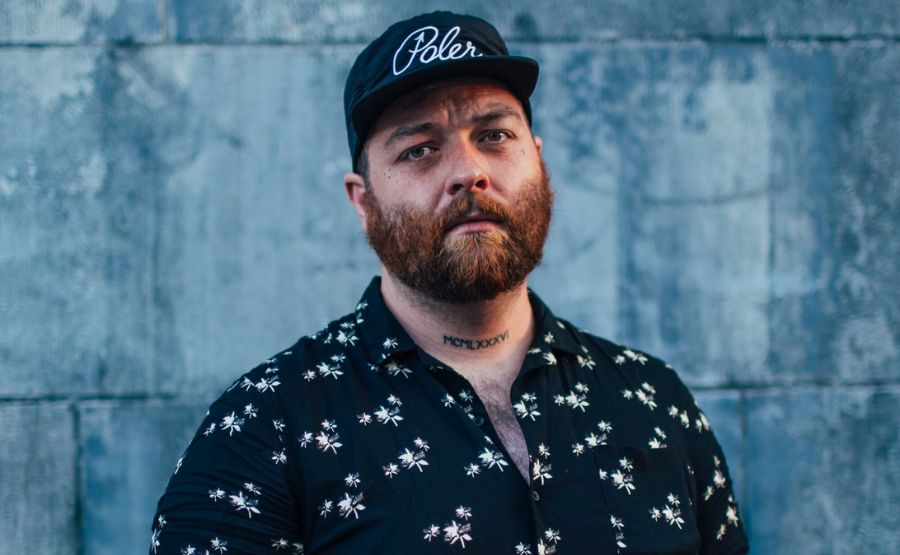
Andy was born on April 9, 1986. He grew up in Hillsborough, the son of an ordinary Sheffield family, the older brother of Rob Nicholson, who would later play bass for Dead World Leaders. Music was clearly in the household DNA.
See also “Steve Edwards: Four Decades of Good Morning, Los Angeles“
School, Friendships, and the Band That Started in Year Eight
The story of how Andy Nicholson met his future bandmates is one of those moments that feels almost too neat to be true — the kind of origin story that gets better every time someone retells it.
He arrived at Stocksbridge High School in Sheffield at the start of Year Eight. New school, new faces, the particular anxiety of trying to figure out where you fit. The first two people he talked to were Alex Turner and Matt Helders.
That is it. That is the whole story. He walked into a new school, started talking to two people, and those were the people he would eventually spend years making music with.
Jamie Cook completed the core lineup. The four of them grew into teenagers who were obsessed with music — who played together, listened together, and slowly figured out that what they were doing in bedrooms and practice rooms was better than they probably had any right to expect it to be.
The early Arctic Monkeys was a genuinely communal project. They handed out CD-Rs of their demos for free at gigs. They built a grassroots following before anyone in the industry had noticed them. Andy was there for every step of that, carrying the low end, providing the rhythmic foundation, and apparently providing the running commentary that kept everyone loose during the tense early days.
The Rise: MySpace, Momentum, and the Debut That Changed Everything
By the mid-2000s, the Arctic Monkeys had become the most talked-about unsigned band in Britain. Their strategy of giving music away directly to fans — first on burned CDs, then through the early social media platform MySpace — had generated a word-of-mouth momentum that the music industry barely knew how to process.
They signed to Domino Records. They released the EP Five Minutes with Arctic Monkeys and then Who the Fuck Are Arctic Monkeys? — both of which Andy played on, both of which helped establish the band’s identity as something genuinely different from what else was happening in British guitar music at the time.
And then, in January 2006, came the debut album. I’m not who people think I am. Andy Nicholson is on every track. His bass playing is woven into the sound that exploded across the UK almost immediately — the album became the fastest-selling debut in British chart history at that point, a record that stood for years.
He was nineteen years old. The band he had helped build from scratch was suddenly enormous. And then everything changed.
The Departure: The Meeting He Still Doesn’t Fully Understand
The sequence of events is not complicated, but the meaning inside it has taken years to fully process.
Toward the end of a European tour, Andy had some family matters that required him to be at home. The band agreed. They brought in Nick O’Malley — someone they knew, a friend of the group rather than a stranger — to cover the bass duties temporarily while Andy sorted things out.
What Andy did not know was that Nick O’Malley was also proving to be a permanent replacement.
The conversation where Andy found out he was no longer in the Arctic Monkeys happened at their management’s office. He has described it as one of the few truly soul-destroying experiences of his life. He remembers sitting there, processing the news, trying to hold himself together. He shook each of his three best friends’ hands. He told them good luck.
He still has no idea why that occurred. He has said this publicly and plainly: to this day, he genuinely does not have a full explanation for why he was removed from the band he co-founded. He called Alex Turner the following day and barely got any words back. After that, they didn’t communicate for years.
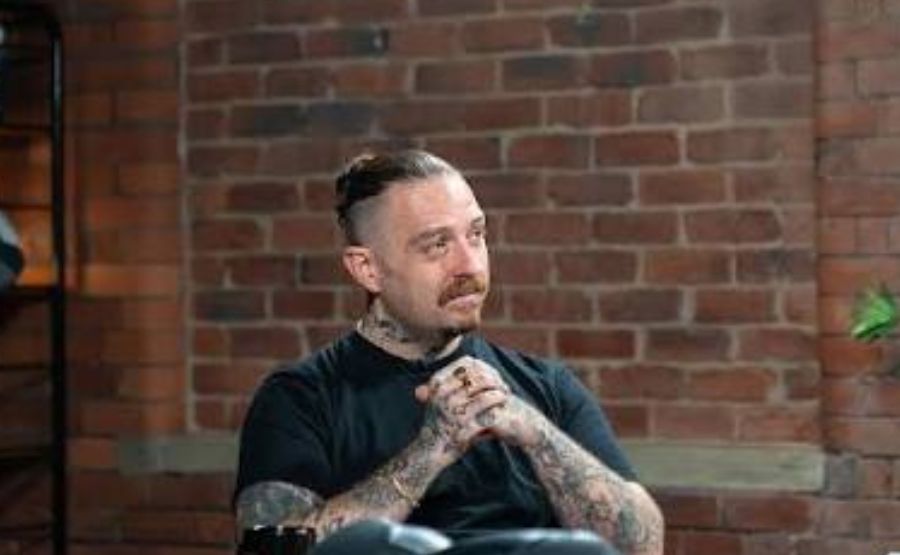
The Difficult Years: Dark Roads and a Long Way Back
This is the part of Andy Nicholson’s story that requires the most care, because it involves real mental health suffering — the kind that he eventually spoke about openly, and which deserves to be treated with the seriousness it carries.
After leaving the Arctic Monkeys, Andy went down a road he has described as genuinely dark. He was depressed. He was adrift. The band he had poured himself into since he was a teenager — the thing that had defined his identity and his friendships and his sense of purpose — had suddenly, inexplicably been closed to him. And he was powerless to influence it.
He has spoken in interviews about contemplating suicide during the years that followed. He watched the band headline Glastonbury in 2007 sitting alone at home. He cried watching it. He has invited people to sit with what that feels like — to have been in the room where something was made, to have contributed to making it, and then to watch the whole world celebrate what you helped build from a position of complete exclusion.
He has also spoken about what helped: talking to people, eventually, rather than carrying it alone. Time. The slow process of rebuilding.
If you or someone you know is struggling with suicidal thoughts, please reach out to a crisis service. Samaritans in the UK: 116 123. In the US: 988 Suicide & Crisis Lifeline.
It took, by his own estimate, about fifteen years to fully digest what happened and arrive at something resembling genuine peace with it.
The Rebuild: Mongrel, Book Club, Reverend, and Finding a New Sound
Andy did not stop making music. Whatever the emotional toll, music was still what he knew how to do and what he wanted to do.
In 2008, he founded Mongrel — a group that brought together an improbable and genuinely interesting lineup. Alongside Andy were Jon McClure and Joe Moskow from Reverend and the Makers, Drew McConnell from Babyshambles, London rapper Lowkey from the Poisonous Poets, and — notably — Matt Helders, Andy’s original Arctic Monkeys bandmate, still playing drums with him even after the split from the main band.
Mongrel released their debut album Better Than Heavy in 2009. The project blended indie rock and hip-hop in ways that reflected where Andy’s musical interests were genuinely heading — away from the guitar-driven indie sound and toward something that incorporated the rhythm-focused, production-oriented sensibility he was developing.
He also played bass with The Book Club, fronted by ex-Milburn singer Joe Carnall, and later joined Reverend and the Makers as their bassist. These were not famous bands in the Arctic Monkeys sense. They were working musicians building projects and scenes, and Andy was part of that world, carving out his own place rather than waiting for something to return him to a spotlight he had lost.
His brother Rob Nicholson, meanwhile, was playing bass for Sheffield band Dead World Leaders — the position Andy had once held in the Monkeys having created a kind of family echo in the next generation down.
GOLDTEETH and the Solo Creative Life
The most personally expressive project in Andy Nicholson’s post-Monkeys career has been his solo work under the name GOLDTEETH. It is where he has brought together his DJ background, his hip-hop influences, his production skills, and his own voice — musical and literal — into something that is entirely his rather than a contribution to someone else’s vision.
In 2019, he released an EP under the GOLDTEETH name, and wrote the book I Bet This Looks Good on Your Coffee Table — a nod to the famous Arctic Monkeys opening line that simultaneously acknowledges his history and reclaims it as something that belongs to his own narrative now.
He has also pursued photography seriously alongside music — adding another visual and creative dimension to his output. He has expressed political views publicly, including support for Labour Party politicians, consistent with a Sheffield upbringing in a city with strong working-class political identity.
Additionally, he is a part of Clubs & Spades, a hip-hop collaboration alongside Maticmouth from Reverend Soundsystem that embodies the most recent active manifestation of his musical journey. since the early 2000s.
Reconciliation With the Band
One of the most quietly important developments in Andy Nicholson’s story is that the fractured relationships eventually healed.
He and the Arctic Monkeys are on good terms now. He has spoken warmly about how that happened — not through any dramatic conversation or formal reconciliation, but through the gradual, patient work of time and proximity. When the band is in Sheffield, they get together for food. When their paths cross elsewhere, they make the effort. There are texts. There is warmth.
He has described being able to feel proud of Whatever People Say I Am, That’s What I’m Not now — to hear his own bass on those tracks and feel like it belongs to his history as much as theirs. For a long time, that was not feasible. It is possible now.
Financial Picture: Honest and Private
Andy Nicholson’s finances are not part of the public record. He was on the debut Arctic Monkeys album — a commercially massive record — but his departure from the band before the full scale of their success arrived means he was not part of the multi-album earning that made the remaining members financially secure.
What he has built since is a working musician’s life — sustained by projects, productions, DJ work, and the accumulated creative output of someone who has stayed active in music for more than two decades. This is not tabloid wealth. It is the honest financial reality of a talented independent artist who works consistently without the infrastructure of a global band behind him.
Life Today: Working, Creating, at Peace
As of 2026, Andy Nicholson is forty years old and still making music. His GOLDTEETH project continues. Rather than being nostalgic for the indie music scene he grew up in, his work with Clubs & Spades is an active dedication to hip-hop-influenced production. He takes photographs. He DJs. He lives in Sheffield, where this whole story began, having built a creative life on the other side of one of the hardest experiences a musician can have.
He is back on good terms with the band he co-founded. That matters. He can talk about that debut album with pride rather than pain.
The book. The EP. The reconciliation. These are not small things. They are the evidence of someone who did the work — the emotional work, not just the musical kind — and came out the other side with his creativity intact and his perspective genuinely broadened.
Final Words
Andy Nicholson’s story is not a comfortable one to sit with. He was nineteen when a band he helped build became enormous. He was twenty when they told him he was out. He spent three years struggling, genuinely, in the dark. He watched his friends headline Glastonbury while he sat alone at home.
And then he kept going.
The music he has made since 2006 has not reached the commercial heights of the band that left him behind. That is simply true. But it is music that is genuinely, authentically his — informed by hip-hop and production and fifteen years of processing, rather than the guitar-band template that made four Sheffield teenagers famous.
He started talking about what happened. That took courage, particularly the parts about how dark the aftermath really was. Those conversations helped people who recognized themselves in his experience. That matters in a way that chart positions do not.
He shook three hands in a management office and said good luck. He meant it, in the end — it just took fifteen years to fully arrive there.
That is the full picture of Andy Nicholson. Not just the founding bassist of a famous band. Not just the one who got left. Someone who built something real on the other side of a devastating loss. Someone who is still building it now.
FAQs
1. Who is Andy Nicholson?
Andy James Nicholson is an English musician, DJ, record producer, and photographer born on April 9, 1986, in Sheffield. He is best known as the original bassist of Arctic Monkeys, co-founding the band in 2002 alongside Alex Turner, Matt Helders, and Jamie Cook. He played on the band’s landmark debut album Whatever People Say I Am, That’s What I’m Not (2006) before being replaced by Nick O’Malley. He has since worked on numerous solo and collaborative projects, most notably under the GOLDTEETH moniker.
2. When did Andy Nicholson leave Arctic Monkeys?
He left the band in 2006, shortly after the release of their debut album. He had taken a break from touring due to family matters, and the band brought in Nick O’Malley as a temporary replacement — who then became permanent. For years it was reported as a mutual departure, but Andy later clarified that the decision was not his and came as a complete shock.
3. Why did Andy Nicholson leave Arctic Monkeys?
He was let go by the band. He has been very clear that he still does not know the full reason. He was asked to leave at their management’s office, shook the hands of his three bandmates, and left. He has said it remains unexplained to him even now, years later.
4. How did Andy Nicholson find out he was being replaced?
He was told by the band’s management at an office meeting. He has described the experience as one of the most soul-destroying moments of his life. After leaving, he called Alex Turner and received barely any response. They did not speak for years.
5. Has Andy Nicholson spoken about his mental health struggles after leaving?
Yes, in significant detail. Speaking on The Michael Anthony Show in 2019 and in a MOJO interview more recently, he described falling into depression and contemplating suicide in the years following his departure. He has also said that talking to people eventually helped him, and that time was ultimately what allowed him to work through it. He now speaks openly about the experience in a way that appears to help others recognize similar struggles.
6. What is GOLDTEETH?
GOLDTEETH is Andy Nicholson’s solo project, through which he produces and performs music that blends hip-hop with other influences. In 2019 he released an EP under that name and also published a book called I Bet This Looks Good on Your Coffee Table — a reference to the famous Arctic Monkeys opening lyric that simultaneously acknowledges his history with the band and reframes it as his own.
7. What was Mongrel and who was in it?
Mongrel was a musical collective Andy formed in 2008 that brought together musicians from several different bands. Members included Jon McClure and Joe Moskow from Reverend and the Makers, Drew McConnell from Babyshambles, London rapper Lowkey, and former Arctic Monkeys drummer Matt Helders. They released the album Better Than Heavy in 2009. The project blended indie rock and hip-hop.
8. Did Andy Nicholson and the Arctic Monkeys ever reconcile?
Yes. He has spoken about being on genuinely good terms with the band now. When they are in Sheffield, they meet for food. When their paths cross in other places, they try to connect. He has described feeling proud of his contribution to the debut album, which took many years to arrive at.
9. What other bands has Andy Nicholson played with?
Beyond Arctic Monkeys and Mongrel, he played bass with The Book Club (fronted by ex-Milburn singer Joe Carnall), joined Reverend and the Makers as a bassist, and has collaborated on Clubs & Spades, a hip-hop project from Reverend Soundsystem featuring Maticmouth.
10. Is Andy Nicholson related to Rob Nicholson of Dead World Leaders?
Yes. Rob Nicholson is Andy’s younger brother and played bass for Sheffield band Dead World Leaders — notably taking over the bassist position from Andy when Andy moved on from that particular role.
11. Where did Andy Nicholson grow up?
He grew up in Hillsborough, Sheffield — close to but distinct from the High Green area where the other Arctic Monkeys members lived. He attended Stocksbridge High School in Sheffield, where he met Alex Turner and Matt Helders on his first days in Year Eight.
12. What is Andy Nicholson’s net worth?
His personal finances have not been publicly documented. He was on the Arctic Monkeys debut album commercially but left before the band’s long-term financial trajectory was established. Since then he has maintained a working musician’s career across multiple projects, DJ work, production, and photography. Any specific figure would be speculative.
Explore ideas that elevate your thinking with The Elevate Magazine.