Elaine Okamura: The Honolulu Girl Who Kept Her Grace Through Everything
Quick Bio
| Detail | Information |
| Full Name | Elaine Okamura Newton |
| Born | 1944, Honolulu, Hawaii, USA |
| Age | ~81–82 (as of 2026) |
| Nationality | American |
| Ethnicity | Japanese-American |
| High School | Kaimuki High School, Honolulu (reported; not definitively confirmed) |
| Career | Pan American World Airways flight attendant (1964–1966); homemaker |
| Known For | First wife of entertainer Wayne Newton |
| Sibling | Shirley Kajioka (sister) |
| Marriage | Wayne Newton (1968–1985, approximately 17 years) |
| Children | One daughter: Erin Newton |
| Notable Appearance | 1982 Reagan Nevada fundraiser at Wayne Newton’s home (Reagan Library records) |
| Current Status | Believed living privately; no confirmed location |
| Estimated Net Worth | ~$1 million (unverified) |
A Note on Sources Before We Begin
Elaine Okamura has spent the better part of six decades ensuring that her life remains genuinely private. The result is a biographical record that is thinner than most, and several online sources fill that thinness with invented detail presented as fact. This biography works only with what is actually verifiable — and says clearly when something comes from a single source and needs to be treated with appropriate caution.
The most credible specific detail in the entire public record of her independent life comes from academic material on Pan American World Airways and its Nisei stewardesses, which documents her employment with Pan Am from 1964 to 1966. Everything else is either confirmed across multiple sources, treated as uncertain, or left out entirely.
Introduction: The Woman Who Never Needed the Spotlight
Wayne Newton spent sixty-plus years of his life performing in Las Vegas. He became one of the most recognizable entertainers in American history — the face of a city, the voice on a hundred stages, the man who could sell out a showroom on a Tuesday in February and make everyone feel like they were at the greatest party of their life. Mr. Las Vegas. A living institution.
Before he was any of that — when he was still becoming whoever he was eventually going to become — he met a woman from Honolulu named Elaine Okamura. She was a Pan Am flight attendant who had grown up in Hawaii’s specific multicultural landscape, shaped by Japanese heritage and island values and the particular quiet dignity that community produced. She was not looking for fame. She was not looking for a Las Vegas life. She was living her own capable, professional life at thirty thousand feet.
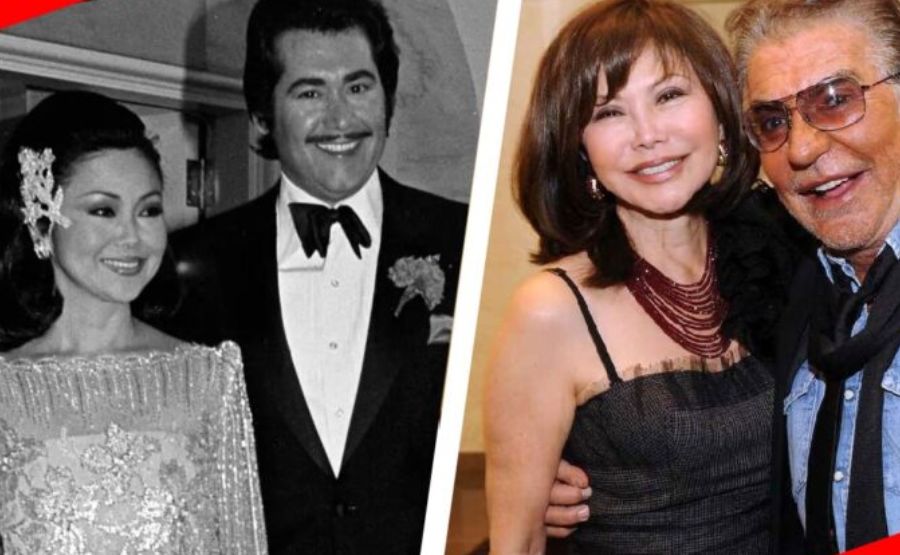
They married in 1968. They had a daughter named Erin. They went through seventeen years of the specific pressures that come with building a life alongside one of the most performing-est humans in America. And then, in 1985, they divorced. Elaine took her daughter, her dignity, and her preference for privacy, and she stepped back from everything the Newton name had brought into her life.
She has been stepping back ever since. Gracefully. Completely. On her own terms.
This is her story — the real one, with appropriate honesty about what the record actually confirms.
See also “Jan Schiltmeijer: The Dutch Painter Who Built His World One Canvas at a Time“
Early Life: Honolulu, Hawaii, and a Japanese-American Childhood
Elaine Okamura was born in 1944 in Honolulu, Hawaii — which means she arrived into a world that was still processing the trauma of what had happened just a few years earlier. The attack on Pearl Harbor in December 1941 had turned Japanese-Americans across Hawaii and the continental United States into people under suspicion, and the aftermath of that suspicion — internment camps on the mainland, community fracturing, the specific cruelty of being treated as foreign in the only country you had ever called home — was still very much part of the lived experience of Japanese-American families when Elaine was born.
Hawaii’s Japanese-American community navigated that period with a combination of resilience and quiet assertion of their American identity that produced something specific in the generations that followed. Elaine grew up inside that tradition. The values that multiple biographical sources consistently attribute to her — composure, dignity, a preference for substance over surface — are consistent with the community orientation she grew up in.
Her parents’ names are not part of any public record. She has never disclosed them, and that discretion extends backward into her childhood just as it has characterized her adult life. Her sister Shirley Kajioka is the one confirmed family connection that appears in reliable sources — a sibling relationship that was presumably a consistent presence throughout Elaine’s formative years.
One source reports that she attended Kaimuki High School in Honolulu — a public school in the southeastern part of the city with a diverse student body and a strong community identity. The source notes this claim needs stronger confirmation before being treated as settled, which is an honest assessment that this biography shares. It is the most specific educational claim available but the least definitively verified.
What the available record does make clear is that she grew up in Hawaii with a firm sense of cultural identity, family loyalty, and the specific grace that the Japanese-American community of her generation tended to cultivate — qualities that would follow her across every subsequent chapter of her life, however different those chapters turned out to be.
Education and Professional Training: Preparing for a Life in the Air
Beyond the Kaimuki High School claim — held lightly for the reasons noted — Elaine’s formal educational history is not documented in any primary source. No university or college credential has been confirmed. What is documented is where she went after whatever education she completed: into one of the most coveted professional positions available to young women in mid-1960s America.
She became a flight attendant for Pan American World Airways.
This is not a small detail. Pan Am in the 1960s was not simply an airline. It was a symbol — of American power, of international glamour, of the postwar world’s optimism about what movement and connection between cultures could mean. Its planes flew routes that connected New York to London, San Francisco to Tokyo, Los Angeles to Honolulu and beyond. Its stewardesses — the term used then — were among the most rigorously selected and carefully trained flight crew in commercial aviation. They were expected to speak multiple languages, navigate cross-cultural interactions with ease, manage emergencies with calm authority, and represent the United States to the world in every interaction.
For Japanese-American women from Hawaii specifically, Pan Am service carried additional meaning. Academic material on Pan Am’s Nisei stewardesses — the most credible single source of documented information about Elaine’s pre-marriage professional life — lists her as having worked for the airline from 1964 to 1966. These were women who embodied the specific excellence of a community that had been viewed with suspicion less than twenty years earlier and who were now representing American hospitality and professionalism on international routes.
Two years of Pan Am service gave Elaine something that no school could: genuine operational experience managing complex situations with poise, an understanding of the international world at a granular level, and the physical and professional discipline that commercial aviation demanded of its crew. She was twenty years old when she started and twenty-two when she finished. By the time she left, she had been to more of the world than most people twice her age.
Meeting Wayne Newton and the 1968 Wedding
The exact circumstances of how Elaine Okamura and Wayne Newton met are not documented in any reliable primary source. What is documented is the outcome: in 1968, Elaine Clarke Okamura married Wayne Newton. She was approximately twenty-four years old. He was twenty-six, and his career was already in full acceleration.
Wayne Newton had begun performing professionally as a child and teenager, developing the technically immaculate vocal instrument and the warmth toward audiences that would define his stage presence for the next six decades. By the time he and Elaine married, he was already a regular fixture on Las Vegas stages and a recognizable name in American entertainment. The marriage was not between an unknown man and a famous woman, or between two unknown people who would rise together. It was between a woman who had been living her own capable, mobile, international life and a man who was in the process of becoming one of Las Vegas’s defining figures.
What the marriage required of Elaine — specifically — was a transition from her own professional independence to the specific domestic and social role of a Las Vegas entertainer’s wife. This is not a small ask. It meant relocating from the mobile, international context of Pan Am service to a life centered on a single city. It meant becoming part of the social infrastructure of Las Vegas, which in the late 1960s and 1970s was a city at the absolute peak of its glamour and its complications. It meant raising a daughter while managing the household of a man whose professional schedule would rarely resemble anything like a nine-to-five.
Life as Mrs. Wayne Newton: Las Vegas, Erin, and the Home Behind the Stage
The years of the marriage were the years when Wayne Newton’s career was building toward what would eventually become his four-decade unbroken residency record in Las Vegas. He was performing constantly. He was acquiring the ranch property outside Las Vegas that would become Casa de Shenandoah — a remarkable compound that reflected his prosperity and his specific aesthetic sensibilities. He was becoming Mr. Las Vegas.
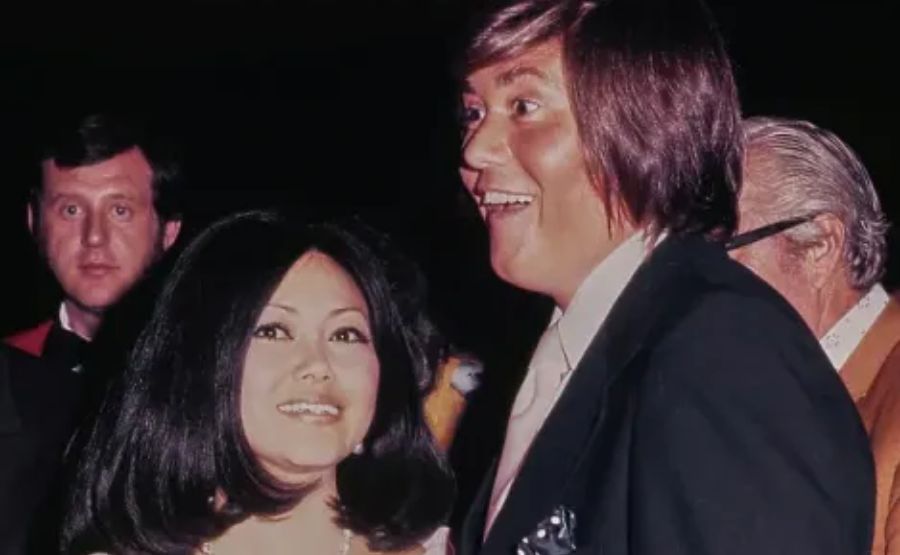
Elaine ran the home. She raised their daughter Erin Newton. She appeared alongside Wayne at the social events that a successful entertainer’s life generates — charity events, political fundraisers, the gatherings of the Las Vegas world’s most prominent figures.
One documented example of that public role comes from the Ronald Reagan Library’s archives. Records in the WHTV collection from the Reagan Library place Elaine in connection with a 1982 Nevada fundraiser held at Wayne Newton’s home. Reagan’s political career was defined by his relationship with Hollywood and entertainment figures, and Wayne Newton was a prominent Reagan supporter. A fundraiser at the Newton home in 1982 — with Elaine’s presence documented in official archives — places her in proximity to some of the most significant figures in American political and entertainment life during that period.
She did not seek attention from these associations. She did not give interviews about what it was like to host a presidential campaign fundraiser. She was there. She fulfilled her role. She maintained her composure. And then she moved on to the next responsibility.
The Divorce: 1985 and the Grace of Departure
In 1985, after approximately seventeen years of marriage, Elaine and Wayne Newton divorced. Elaine was approximately forty-one years old. Their daughter Erin was a teenager.
The specific reasons for the divorce are not part of any public record that Elaine has contributed to. She has given no interviews about it. She has made no public statements. She did not hire a publicist to manage her narrative. She did not write a memoir. She has never, in the four decades since the divorce, attempted to use the dissolution of her marriage to a famous person as material for anything resembling a public career.
Wayne Newton subsequently married Kathleen McCrone, a Las Vegas attorney, in 1994 — nine years after the divorce from Elaine. He has spoken about his life and career extensively over the decades. Elaine’s silence, by contrast, has been absolute.
That silence is itself meaningful. It represents a choice made and sustained over forty years. It reflects someone who decided that whatever happened in the marriage — whatever the private truth of how it ended — belonged to her and to no audience.
Personal Life After the Divorce: Erin and the Invisible Years
Elaine’s life after 1985 is, by design, the least documented chapter of her story. She raised Erin. Erin Newton has gone on to build her own adult life, and the relationship between mother and daughter appears — from the limited signals available through Wayne Newton’s occasional public comments about his family — to be warm and maintained.
Elaine has not been photographed at public events in any documented way since the divorce. She does not maintain social media accounts. She has not been interviewed by any outlet of record. She is not referenced in Wayne Newton’s authorized biographical material in any way that generates independent public information about her current life.
She is, as far as the record can determine, living privately. Her location is not confirmed. Her activities are not documented. She is, by the evidence of everything the record shows, exactly where she wants to be.
Challenges: The Specific Weight of a Very Public Marriage
The challenge that most defined Elaine Okamura’s adult life is one that many people recognize in outline but rarely appreciate in its specific texture: being married to someone extraordinarily famous, in a city that runs on performance and image, while trying to maintain your own sense of self and your own values in an environment that constantly pulls in the opposite direction.
Las Vegas in the late 1960s and 1970s was not a place where privacy came easily, especially for the family of one of its most recognizable residents. Everything about the city was built for spectacle. Everything about Wayne Newton’s career was built for spectacle. Elaine, by temperament and by cultural heritage, was built for something else entirely.
The fact that she maintained her composure, raised a daughter, fulfilled the social obligations of her position, and then exited the marriage without generating a single headline that centered her own grievances — that is a genuinely difficult thing to do, and it reflects someone whose self-possession was genuine rather than performed.
Financial Situation: Settled, Private, Unverifiable
Elaine Okamura’s personal financial position is genuinely unknown in its specifics. Various sources estimate her net worth at approximately $1 million — a figure that reflects the likely outcome of a divorce settlement from a seventeen-year marriage to someone who became extremely prosperous. The specific terms of any settlement are not public record.
She has not built any confirmed independent business or income stream that appears in public sources. Her financial security appears to rest on the foundation the marriage and its ending provided, and on whatever private financial management she has done since. She is, to all appearances, financially stable without being wealthy in any headline-generating sense.
The honest position is: her finances, like everything else about her post-1985 life, are private.
Today: Eighty-One Years Old and Still Her Own Person
As of 2026, Elaine Okamura is approximately eighty-one or eighty-two years old. She is believed to be alive and living privately — no obituary, no death record, and no credible news report of her passing has appeared in any public source. She is not on social media. She has not given any interviews. There is no record of her attending any public events.
Her daughter Erin is an adult woman building her own life. Elaine is, presumably, a grandmother or at least a present mother figure in Erin’s adult world.
She is doing exactly what she has always done: living on her own terms, in her own space, without an audience.
Final Words
Elaine Okamura’s biography is one of the most genuinely private lives attached to a recognizable name in contemporary American entertainment history. She grew up in Honolulu shaped by Japanese-American values that prized dignity, community, and composure. She became a Pan Am stewardess at a time when that career represented excellence, internationalism, and professional achievement for young Japanese-American women. She married one of Las Vegas’s most famous performers, raised a daughter, fulfilled every social obligation her position created, and then divorced without generating a single public statement about what the marriage had cost her.
Forty years of silence after the divorce is not the silence of someone who has nothing to say. It is the silence of someone who decided that whatever she has to say belongs to her private life rather than to a public eager to hear the inside story of a famous marriage’s end.
She is eighty-one years old. She is, as far as the record shows, still living. And she is still, improbably and admirably, completely her own person — not Wayne Newton’s first wife, not Erin’s mother, not a chapter in someone else’s story, but Elaine Okamura: a woman from Honolulu who flew the world for Pan Am, built a family in the loudest city in America, and then stepped quietly out of the noise she had never asked to be part of.
That is not a small life. That is, in its own quiet way, a remarkable one.
See also “Jan Schiltmeijer: The Dutch Painter Who Built His World One Canvas at a Time“
FAQs
1. Who is Elaine Okamura?
Elaine Okamura is a Japanese-American woman born in 1944 in Honolulu, Hawaii. She is known publicly as the first wife of entertainer Wayne Newton, to whom she was married from 1968 to 1985. Before her marriage, she worked as a Pan American World Airways flight attendant from approximately 1964 to 1966. She has one daughter, Erin Newton, and has lived privately since her divorce.
2. When was Elaine Okamura born?
She was born in 1944, making her approximately eighty-one or eighty-two years old as of 2026. Her exact birth date has never been publicly disclosed, consistent with her lifelong preference for privacy.
3. Where did Elaine Okamura grow up?
She was born and raised in Honolulu, Hawaii. She is of Japanese-American heritage — part of the Nisei and Sansei community traditions of Hawaii that shaped her cultural values and personal character.
4. Did Elaine Okamura have a career before her marriage to Wayne Newton?
Yes. Academic material on Pan American World Airways and its Japanese-American stewardesses confirms that Elaine worked for Pan Am from approximately 1964 to 1966. Pan Am was one of the world’s most prominent international airlines during that period, and its crew were among the most rigorously selected in commercial aviation.
5. When did Elaine Okamura and Wayne Newton get married?
They married in 1968. Before divorcing in 1985, they were married for about seventeen years.
6. How many children did Elaine Okamura and Wayne Newton have?
They have one daughter together: Erin Newton. Erin was a teenager at the time of her parents’ 1985 divorce and has built her own adult life since.
7. Why did Elaine Okamura and Wayne Newton divorce?
The specific reasons for their divorce are not part of any public record that Elaine has contributed to. She has never given interviews about the marriage or its end. The divorce was finalized in 1985. Neither party has publicly detailed what caused the separation.
8. Did Elaine Okamura appear at any notable public events during her marriage?
Yes. Ronald Reagan Library records in the WHTV collection document her presence in connection with a 1982 Nevada fundraiser held at Wayne Newton’s home. Wayne Newton was a public Reagan supporter, and the fundraiser placed Elaine at a significant political and social event of that era.
9. Has Elaine Okamura spoken publicly about Wayne Newton since the divorce?
No. She has given no interviews and made no public statements about Wayne Newton, their marriage, or its end in the four decades since the divorce. Her silence on the subject has been total and consistent.
10. Where is Elaine Okamura now?
No trustworthy public source has verified her present location. She maintains no social media presence, has given no interviews, and has made no documented public appearances since her 1985 divorce. It is thought that she resides in private in the US.
11. What is Elaine Okamura’s estimated net worth?
Various sources estimate her net worth at approximately $1 million. This reflects the likely financial outcome of a seventeen-year marriage to a prosperous entertainer and the divorce settlement that would have followed. Her finances are not documented publicly in any verifiable way. Rather than being a verified number, the estimate should be regarded as an educated approximation.
12. Does Elaine Okamura have siblings?
She has one confirmed sibling: a sister named Shirley Kajioka. This is one of the few family details that appears in multiple independent sources. Her parents’ names and any other family details are not part of the public record.
Explore ideas that elevate your thinking with The Elevate Magazine.