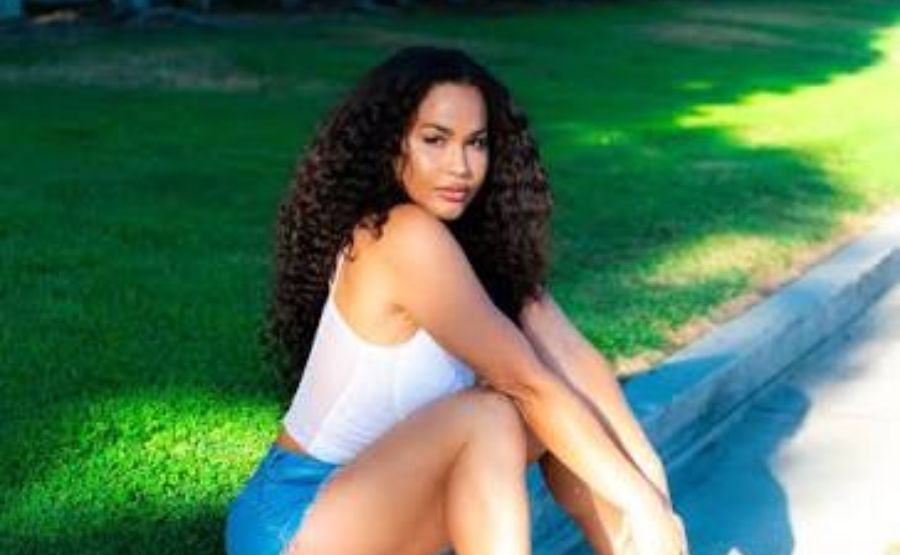
Rosa Acosta: From the Ballet Stage in Santiago to the Covers of America
Quick Bio
| Detail | Info |
| Full Name | Rosa Acosta |
| Date of Birth | April 30, 1984 |
| Place of Birth | Santiago de los Caballeros, Dominican Republic |
| Nationality | Dominican-American |
| Ethnicity | Dominican (Afro-Latina) |
| Occupation | Model, Dancer, Actress, Fitness Personality, Massage Therapist |
| Known For | Magazine covers for King, Smooth, and XXL; Love & Hip Hop Hollywood; National Ballet of the Dominican Republic |
| Brother | DJ Smoke |
| Height | 5 ft 5 in (1.65 m) |
| Training | ICA (Instituto de Cultura y Arte); Ballet School of Norma Garcia |
| Awards | XXL Eye Candy of the Year (2009); Urban Model Awards: Model of the Year (2010), Cover Model of the Year (2012) |
| Estimated Net Worth | ~$1.5–3 million |
Introduction
Before Rosa Acosta ever appeared on a magazine cover or stepped in front of an American camera, she was a ballet dancer representing the Dominican Republic on a national stage. She had started training at four years old, progressed through the most prestigious dance institutions in her country, and by the time she was eighteen had become the youngest soloist in the Dominican National Ballet.
None of that is the story most people know about her.
Most people discovered Rosa Acosta through music videos, through the pages of King and XXL, through a kiss with Amber Rose that set the internet on fire in 2011, or through her appearance in the orbit of the Kardashian family. They encountered a woman who was undeniably striking, who carried herself with the particular physical confidence of someone whose body had been trained to do extraordinary things from childhood, and who seemed perfectly comfortable being the center of attention.
What gets lost in that version of the story is where the physical excellence came from, what it cost, and how a girl from Santiago de los Caballeros built something real and lasting out of the combination of talent, discipline, and an instinct for reinvention that never quite switched off.
See also “Debby Belichick: The Woman Who Built Her Own Story“
Santiago de los Caballeros: The City That Made Her
Santiago de los Caballeros — Santiagueros just call it Santiago — is the second-largest city in the Dominican Republic and the cultural capital of the Cibao region. It is a city of commerce, of music, of deep national pride, and of the particular creative energy that produces artists across multiple disciplines. The merengue tradition, the visual arts scene, the theatrical and dance culture — all of it is rooted in the specific character of a city that has always understood itself as distinct from Santo Domingo in ways that matter.
Rosa Acosta was born there on April 30, 1984. She grew up with her brother — known professionally as DJ Smoke, suggesting a household where entertainment was in the air from the beginning — in a family that was Christian in its values and connected to its Dominican cultural identity in ways that would show up throughout her professional life. Her parents have remained private figures, their names not confirmed in any public source, which is consistent with how Rosa has managed the boundary between her public career and her family life.
She was raised with the discipline of faith and the expressiveness of a culture that takes music, dance, and creative performance seriously as forms of both joy and identity. The combination set her up for what was coming without either of them knowing it yet.
Four Years Old and Already Listening to Her Body
The story of Rosa Acosta’s formal artistic development begins at four years old — the age when she started classical ballet training at the Centro de la Cultura in Santiago. This is not a story of a child being pushed toward dance by a stage parent or an ambitious coach. It is the story of a child who found something that felt right and pursued it with the kind of instinctive seriousness that genuine talent tends to produce.
Classical ballet at a serious level is one of the most demanding physical and artistic disciplines that exists. It requires the child’s body to be trained in specific ways during windows of physical development that don’t return. It requires repetition, discomfort, and the capacity to accept correction gracefully while maintaining the internal drive to improve. Children who stay with it do so because something in the work feeds them even when it hurts.
Rosa stayed with it. More than stayed — she excelled.
The ICA, Norma Garcia, and the Making of a Dancer
From the Centro de la Cultura, Rosa progressed to the Instituto de Cultura y Arte — the ICA — one of the most respected arts training institutions in the Dominican Republic. The move represented a significant step up in the rigor and formality of her training, from a cultural center offering quality instruction to a dedicated institution whose graduates were expected to go on to professional careers in the arts.
She also trained at the Ballet School of Norma Garcia — named for one of the foundational figures in Dominican classical dance — where she developed the technical depth that would eventually land her in the national company. Between the two institutions, she received an education in classical ballet that was comprehensive, competitive, and genuinely demanding.
She graduated from both the ICA and the Norma Garcia school with honors. Her degree — a Bachelor in Art with a specialization in Classical Ballet — wasn’t just a credential. It was the documentation of years of daily work, of the particular sacrifice that serious dance training requires, and of a level of artistic achievement that her instructors recognized as exceptional.
The graduation led directly to the next step.
The Dominican National Ballet: Youngest Soloist at 18
In 2002, at eighteen years old, Rosa Acosta became a soloist with the Dominican National Ballet — the official national company of the Dominican Republic and the highest expression of classical dance in the country.
She was the youngest person on the team to hold that role.
A soloist in a ballet company is not a member of the corps — not part of the ensemble that creates the visual fabric of a production. A soloist takes center stage. She performs featured roles that require both technical precision and artistic interpretation. She is trusted with material that the production’s success depends on. Getting there at eighteen, ahead of dancers who had been training as long or longer, is a statement of genuine ability rather than institutional favor.
She participated in all of the company’s major classical and modern productions during her time on the national team. The Dominican ballet world paid attention, and so did the government agency responsible for recognizing cultural achievement. Twice, the Secretaría de Estado de la Juventud — the state agency overseeing youth affairs and cultural development — nominated her for her contributions in the Cultural Development category. The recognition confirmed what the company already knew: she was doing something worth acknowledging.
The Pivot: Modeling in the DR and the Decision to Leave
In 2004, two years into her national ballet career, Rosa began modeling in the Dominican Republic. The transition was natural in the way that movements between related fields of physical performance often are — she had a trained body, a comfort in front of audiences, and a visual presence that the modeling world immediately responded to.
She worked with Dominican television networks and local businesses, building a portfolio and a local reputation that would become the foundation for the next move. The Dominican market gave her experience, visibility, and the professional confidence of knowing that what she was offering had commercial appeal.
By 2006, she had built enough of a reputation to attract the attention of American agencies. She made the decision that ambitious people from small countries making big work tend to eventually make: she moved to the United States.
She was twenty-two years old. She was moving to a market where nobody knew her ballet training or her national team membership or her government nominations. She was starting over in the most competitive modeling environment in the world with her portfolio, her presence, and her complete willingness to put in whatever work was required.
America: Magazines, Music Videos, and Making a Name
The American career that Rosa Acosta built between 2006 and 2012 was the product of sustained effort in a market that is genuinely indifferent to effort. You don’t get on the cover of King because you work hard. You get there because you’re extraordinary, and you got in the right rooms at the right time, and you made the people in those rooms believe in what they were seeing.
She got there.
King magazine, Smooth, XXL — the publications that defined the visual culture of hip-hop media in the 2000s — all featured Rosa across multiple shoots. Her aesthetic fit the moment with unusual precision: she was athletic and feminine simultaneously, classically beautiful but not conventional, with the kind of physical control in front of a camera that only makes sense when you understand where it came from. The ballet training was invisible and everywhere at once.
The music video work brought her even wider visibility. She appeared in videos alongside significant names in hip-hop — Juelz Santana, P. Diddy, and others — at the height of the music video era’s cultural influence. These weren’t generic extras roles. She was featured, visible, recognizable — the kind of face that viewers remembered after the video ended.
In 2009, XXL named her Eye Candy of the Year. The Urban Model Awards followed with Model of the Year in 2010 and Cover Model of the Year in 2012 — institutional recognition from within the industry that documented what the magazine covers were already saying.
Reality Television and the Kardashian Chapter
In 2012, Rosa Acosta appeared in Khloe & Lamar — the E! reality series following Khloe Kardashian and Lamar Odom. The connection came through Rob Kardashian, Kim’s brother, who had a personal relationship with Rosa that the show addressed directly.
The relationship between Rosa and Rob generated significant tabloid attention, partly because of his family’s existing media footprint and partly because the story developed a complication that reality television found irresistible. Rosa became pregnant. Viewers speculated about the father. She eventually confirmed that Rob was indeed the father — and also confirmed, with remarkable public candor, that she had suffered a miscarriage.
“I’m glad he was there for me as a friend and ready to step up as a dad,” she said. The statement was generous and composed, the kind of thing that is easy to say and genuinely hard to mean in the aftermath of a personal loss under public observation.
In 2011, a photograph of Rosa kissing Amber Rose — model, actress, and pop culture figure — circulated online and generated enormous attention. The image was taken at a social event and spread rapidly through the internet at a moment when social media virality was still a relatively new phenomenon. It set what people at the time were calling the internet ablaze, which is a way of saying that millions of people saw it and had opinions.
Rosa later made an appearance in Love & Hip Hop Hollywood, where episodes depicted her relationship with Nikki Mudarris, a key character in the show’s social sphere. with the particular intensity that reality television both documents and generates.
The Fitness Turn and What She Built Next
As the peak of her magazine-cover phase evolved, Rosa turned her focus increasingly toward fitness — an arena that made complete sense given where she had come from. A woman who had trained as a classical ballet dancer from age four and maintained that discipline across decades of professional work had a relationship with physical conditioning that was different in kind from most fitness personalities.
She became a certified massage therapist — adding a credential that connected to her understanding of the body as a technical instrument requiring care as well as conditioning. The fitness platform she built online and through her professional work was grounded in genuine expertise rather than simply a trained physique.
She has described herself in various public bios and social media profiles with the combination of humor and self-awareness that characterizes her public persona: “Ballet Dancer, Massage Therapist, Elbow Lover, Nippologist, Scar kisser, Shower Opera Singer, Midget hunter and future chef” is the description she offered on her Twitter profile, which captures something genuine about a person who takes her work seriously but not herself quite so much.
The Anorexia Struggle: A Truth She Shared
Rosa Acosta has spoken openly about a past struggle with anorexia — an eating disorder that is documented across multiple sources who covered her career and that she has addressed without defensiveness or excessive drama.
The connection between elite ballet training and disordered eating is well documented. The culture of classical dance, particularly at competitive levels, historically created and enforced extremely narrow standards of acceptable body weight and shape — standards that were and are genuinely dangerous for developing bodies and minds. Rosa was in that environment from childhood, and the discipline it imposed was not always applied in ways that were healthy.
She found her way through it. The fitness focus that characterizes her later career — building strength, training functionally, understanding the body as something to be made more capable rather than simply thinner — reads as a direct response to the earlier period. She has built a professional identity around physical health rather than the performance of smallness.
Net Worth and the Financial Picture
Rosa Acosta’s estimated net worth sits at approximately $1.5 to $3 million as of 2025–2026, a range that reflects the accumulated earnings of a career spanning modeling, music video appearances, reality television fees, fitness platform work, massage therapy practice, and brand partnerships developed across two decades of professional visibility in the United States.
The figure is modest relative to what the magazine covers might suggest, but accurately reflects the financial reality of a career built primarily in the modeling and entertainment-adjacent space — industries where only a small percentage of participants accumulate significant long-term wealth, and where earnings are often intense for short periods rather than sustained across decades.
She has never publicly disclosed financial information, and the estimates that circulate across credible sources vary enough to suggest genuine uncertainty about her exact position.
Final Words
Rosa Acosta’s story moves between worlds that don’t usually connect: the Dominican National Ballet and the pages of King magazine, classical technique and hip-hop video aesthetics, personal loss disclosed with grace and internet virality navigated without apparent damage to her sense of self.
What stays consistent throughout all of it is the physical discipline — the inheritance of a four-year-old who found something in ballet that was worth every early morning, every correction, every performance on a national stage before she was old enough to vote. That discipline didn’t stay in the ballet world. It followed her into modeling, into fitness, into everything she has done since.
She came from Santiago. She built something in America on the back of what Santiago gave her. And the quiet fact at the center of everything — that the most impressive credential in her career is also the least-known one, the one about being the youngest soloist in a national ballet company — tells you something important about how much she brought to every room she ever walked into before anyone knew her name.
See also “Debby Belichick: The Woman Who Built Her Own Story“
FAQs
1. Who is Rosa Acosta?
Rosa Acosta is a Dominican-American model, dancer, actress, fitness personality, and certified massage therapist born on April 30, 1984, in Santiago de los Caballeros, Dominican Republic. She is known for her work in King, Smooth, and XXL magazines, her appearances in hip-hop music videos, and her roles on reality television shows including Khloe & Lamar and Love & Hip Hop Hollywood.
2. When and where was Rosa Acosta born?
She was born on April 30, 1984, in Santiago de los Caballeros — the second-largest city in the Dominican Republic and the cultural capital of the Cibao region. She grew up there in a Christian household alongside her brother, who later became known in the entertainment industry as DJ Smoke.
3. What was Rosa Acosta’s ballet career?
She began classical ballet training at age four at the Centro de la Cultura in Santiago. She progressed to the ICA (Instituto de Cultura y Arte) and the Ballet School of Norma Garcia, where she graduated with honors with a Bachelor in Art specializing in Classical Ballet. In 2002, at age eighteen, she became a soloist with the Dominican National Ballet — the youngest member of the company to hold that role. She was twice nominated by the Dominican government’s Secretaría de Estado de la Juventud for her work in Cultural Development.
4. When did Rosa Acosta move to the United States?
She began modeling in the Dominican Republic in 2004, working with local television networks and businesses. By 2006, her profile was strong enough to attract the attention of American agencies, and she relocated to the United States that year to pursue her career in the American modeling market.
5. What magazines has Rosa Acosta appeared in?
She has appeared in King, Smooth, XXL, and other publications that defined hip-hop media culture in the 2000s. XXL named her Eye Candy of the Year in 2009. She received the Model of the Year award from the Urban Model Awards in 2010 and Cover Model of the Year in 2012.
6. What reality shows has Rosa Acosta appeared in?
She appeared in Khloe & Lamar, the E! reality series featuring the Kardashian family, in connection with her personal relationship with Rob Kardashian. She later appeared in Love & Hip Hop Hollywood, where her relationship with Nikki Mudarris was a featured storyline.
7. What happened between Rosa Acosta and Rob Kardashian?
She had a personal relationship with Rob Kardashian that was addressed on Khloe & Lamar and connected to the broader Keeping Up with the Kardashians universe. She miscarried after becoming pregnant with his child. She spoke publicly about his response with appreciation, saying he was ready to be supportive and step up as a father.
8. Who is Rosa Acosta’s brother?
Her brother is known professionally as DJ Smoke. He is also active in the entertainment industry, though the specific nature of his work and his real name have not been widely documented in public sources.
9. Has Rosa Acosta spoken about personal health challenges?
Yes. She has spoken openly about past struggles with anorexia — an eating disorder that is particularly prevalent in the classical ballet world due to that culture’s historical enforcement of extremely narrow body standards. Her subsequent focus on functional fitness and physical strength reflects a different relationship with her body from the one that ballet culture imposed during her training years.
10. What is Rosa Acosta’s fitness career?
After the peak of her magazine-cover modeling period, Rosa turned increasing professional attention toward fitness. She became a certified massage therapist, adding formal credentials to her existing expertise in physical conditioning developed through decades of dance training. She has built a fitness platform and brand that draws on both her ballet foundation and her professional experience with body mechanics.
11. What is Rosa Acosta’s estimated net worth?
Her net worth is estimated at approximately $1.5 to $3 million, accumulated through modeling, music video appearances, reality television fees, fitness work, massage therapy practice, and brand partnerships across a two-decade professional career in the United States. The exact figure has not been publicly disclosed.
12. What makes Rosa Acosta’s background unusual for a model in her genre?
The classical ballet foundation is genuinely unusual. Most models who built careers in hip-hop media in the 2000s arrived from fashion, from performance backgrounds in pop culture, or simply through the right photographs at the right time. Rosa arrived as a former national ballet soloist with a formal arts degree and government recognition from her home country — credentials that were largely invisible to the American audiences discovering her, but that explain the precision and physical command that made her images stand out.