
Pepe Aguilar Net Worth: The Prince of Mexican Music Who Built His Own Kingdom
Quick Bio
| Detail | Information |
| Full Name | José Antonio Aguilar Jiménez |
| Born | August 7, 1968 |
| Birthplace | San Antonio, Texas, USA |
| Age (2026) | 58 years old |
| Citizenship | Mexico and United States (dual) |
| Raised In | Zacatecas, Mexico |
| Nationality | Mexican-American |
| Occupation | Singer, songwriter, record producer, actor |
| Known For | Regional Mexican music; Grammy Awards; Hollywood Walk of Fame |
| Career Start | Age 3 (family performances); Solo debut 1989 |
| Albums Sold | 12–13 million+ worldwide |
| Awards | 4 Grammy Awards; 4–5 Latin Grammy Awards; 19 Lo Nuestro Awards; Hollywood Walk of Fame star; Billboard Musical Legacy Award |
| Parents | Antonio Aguilar (father); Flor Silvestre (mother) |
| First Marriage | Carmen Trevino (m. 1991, div.) |
| Current Spouse | Aneliz Álvarez Alcalá (m. 1997) |
| Children | Emiliano, Aneliz, Leonardo, Ángela |
| Own Label/Studio | Yes — fully independent |
| Estimated Net Worth | ~$20–25 million |
Introduction: The Man Who Carried a Dynasty and Built Something New
There is a particular kind of pressure that comes with being born into greatness. When your parents are icons — not just successful artists, but the kind of figures whose names are woven into a nation’s cultural identity — every decision you make as a performer gets measured against something enormous.
Pepe Aguilar knows that pressure better than almost anyone alive.
His father, Antonio Aguilar, was one of the most beloved actors and musicians in Mexican history — a figure of the Golden Age of Mexican cinema who sold tens of millions of albums and starred in films that generations of families watched together. His mother, Flor Silvestre, was a celebrated singer and actress in her own right. Together they were not simply famous. They were Mexican royalty.
Pepe could have simply inherited the throne. He did not.
Instead, he did something considerably more difficult and considerably more interesting. He took the mariachi and ranchera traditions that his family embodied so completely and pushed them somewhere new — mixing them with contemporary pop energy, experimenting with Latin rock and electronica, producing records that honored the past without being trapped by it. He built his own record label and his own studio. Over twelve million albums have been sold by him globally. He collected Grammy Awards on both sides of the linguistic divide. He walked into Madison Square Garden at the age of three on his parents’ stage and never really left the stage since.
And now he is doing something else that is equally remarkable: passing all of it to a new generation of Aguilars who are finding their own voice inside the same traditions. His daughter Ángela Aguilar is one of the most recognizable young artists in Mexican music today. His son Leonardo is building his own career. The dynasty continues. And Pepe is both its current pillar and its most enthusiastic architect for what comes next.
See also “Bubba Wallace Net Worth: Inside His Racing Career and Fortune“
Early Life: Born on Tour, Raised in Zacatecas
The circumstances of Pepe Aguilar’s birth are themselves a kind of metaphor for the life that followed.
His parents, Antonio Aguilar and Flor Silvestre, were on tour in Texas on August 7, 1968, when their son arrived — specifically in San Antonio, the city that would give him American citizenship as a birthright while simultaneously having almost nothing to do with how he actually grew up.
That growing up happened in Zacatecas — the state in north-central Mexico that served as the Aguilar family’s home base and where the cultural roots of their musical tradition ran deepest. Ranchera music, the deeply emotional genre of Mexican popular song built around themes of love, loss, patriotism, and rural life, has strong connections to Zacatecas. Growing up there meant growing up inside the living tradition that both his parents represented — not as a museum piece but as something genuinely alive in the community around him.
The practical reality of Pepe’s childhood was not quite the same as most children’s. His parents were constantly performing, constantly touring across Latin America, and Pepe traveled with them. He was not dropped off with grandparents while his parents worked. He came along. He watched from the wings. He absorbed the mechanics of large-scale performance — how a crowd responds, how a performer commands a stage, what the difference sounds and feels like between a good night and a transcendent one — before he was old enough to read.
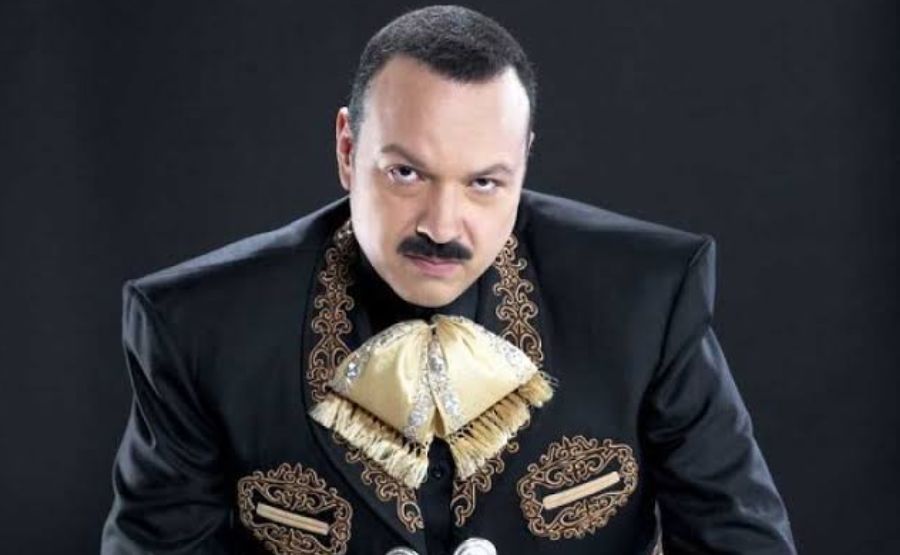
By the time he was three years old, he had already made his performance debut. And the venue was not a local club or a school recital. His first stage was Madison Square Garden in New York City, performing alongside his parents in front of an audience that had come to see icons. That is not a typical introduction to the performing life.
Education: The Stage Was the Classroom
Pepe Aguilar’s formal education exists but has not been the subject of extensive public documentation. What is clear from his career trajectory — and from his own comments over the years — is that his real education happened through experience rather than through any institutional setting.
He grew up watching his father manage the business side of an entertainment career that spanned music, film, and theater. He learned what it looked like when an artist controlled their own destiny versus when they were dependent on someone else’s machinery to function. He absorbed the songwriting craft of his parents’ generation by living inside it on a daily basis. He developed production instincts — an ear for what an arrangement needs, a sense of how a record should feel to the person listening late at night in their kitchen — through years of immersion rather than through formal study.
By his late teens and early twenties, he had already begun producing music for other artists and writing songs that were not simply extensions of what his parents had done. The education was complete enough to begin building something real.
Career Beginnings: From Family Stage to Solo Voice
Pepe spent his earlier years performing within the family context — on the tours, at the events, as part of the Aguilar enterprise. These were formative years in the most literal sense: they formed him as a performer in ways that no amount of conventional training could have replicated.
His independent launch as a solo artist came in 1989, with the release of Pepe Aguilar Con Tambora. The tambora — a large bass drum central to the banda music tradition of Sinaloa and other northern Mexican states — signaled something immediately. This was not just an extension of the ranchera and mariachi traditions his parents had defined. This was a younger artist introducing different sonic elements, bringing different energy, and beginning to map his own territory within the broader landscape of regional Mexican music.
The early releases built an audience without yet achieving the commercial breakthrough that would define the following decade. He was working, recording, and developing the artistic identity that would eventually make him one of the best-selling Latin artists of his generation.
The real turning point came in 1992. Recuérdame Bonito — an album written and produced by the celebrated songwriter Joan Sebastian — gave Pepe his first genuine commercial breakthrough. The combination of his distinctive baritone and Sebastian’s songwriting created something that connected with audiences on a scale his previous work had not reached. It was the moment that separated the promising regional artist from something considerably larger.
The Rise: Platinum Records and a New Sound
The years following Recuérdame Bonito saw Pepe Aguilar accelerate on every front simultaneously. He was building commercial success while also expanding his creative range in directions that would eventually surprise people who had categorized him too quickly.
He was collaborating with artists well outside the regional Mexican world — working as a songwriter and producer with Julieta Venegas, with Lupita D’Alessio, with Ely Guerra. He was engaging with rock, with electronica, with Latin pop in ways that demonstrated someone whose artistic curiosity was not confined by genre.
But the commercial peak of his career came in 1999 with Por Una Mujer Bonita. The album went quadruple platinum. It sold millions of copies and positioned Pepe Aguilar as unquestionably one of the dominant figures in Latin music — not just in regional Mexican specifically but across the broader landscape.
The following year, that album earned him his first Grammy Award for Best Mexican/Mexican-American Album. The recognition was significant not just for the award itself but for what it confirmed about the trajectory he had been on for more than a decade.

Major Achievements: The Awards That Defined a Legacy
Let’s actually count what Pepe Aguilar has accumulated across a career that now spans more than three decades as a solo artist.
Four Grammy Awards. Four or five Latin Grammy Awards, depending on the specific count at any given point. Nineteen Lo Nuestro Awards — the record-holder in some categories — including the coveted Excellence Award that the ceremony reserves for artists whose contribution to Latin music goes beyond any single year or album. A Billboard Award for Musical Legacy. A star on the Hollywood Walk of Fame, placed at the intersection of Hollywood Boulevard and Vine Street, where the name Aguilar joins company that includes his own father.
The Grammy wins came from albums that reflected the range of his ambitions. Bicentenario — his 2010 tribute to Mexico’s two-hundred-year anniversary as an independent nation — won the Grammy for Best Regional Mexican Album and demonstrated his ability to create conceptually driven work that connected historical significance with genuine emotional resonance. Más De Un Camino, the 2012 EP, won another Grammy and placed inside the Top 20 on the Top Latin Albums chart, doing so with a fusion of traditional mariachi and contemporary pop that sounded like no one else’s specific combination.
His Con Mariachi tour in 2012 sold out the Gibson Amphitheatre in Los Angeles for three consecutive nights. Three nights at the same venue, back to back. That is the kind of audience relationship that takes decades to build.
He also opened his own studio and record label — a decision that gave him creative and financial control over his output in a way that most recording artists never achieve. The ability to self-produce, self-release, and control the direction of his career without being subject to a major label’s priorities has shaped both the artistic freedom and the financial independence that characterize his later career.
Personal Life: Two Marriages and a Family Dynasty
Pepe married Carmen Trevino in 1991. They divorced since their marriage did not work out. He has a son, Emiliano Aguilar, from this first marriage.
In 1997, he married Aneliz Álvarez Alcalá — a partnership that has now lasted nearly three decades and produced three children who are themselves building significant careers in music.
Aneliz Aguilar — their daughter born in 1997 — operates primarily behind the scenes of the family’s artistic enterprise. Leonardo Antonio Aguilar Álvarez, born August 15, 1999, in Mexico City, has pursued a singing career that has already generated Latin Grammy nominations. And then there is Ángela.
Ángela Aguilar, born in 2000 in Los Angeles, is the child who has most visibly inherited the family’s musical gift in the eyes of the world. Her performance of “La Llorona” at the 19th Annual Latin Grammy Awards in 2018 — delivered with a poise and emotional depth that made viewers forget she was a teenager — announced her to a global audience in a single unforgettable moment. She has since become one of the most discussed young artists in Latin music, and her public visibility has extended the Aguilar family’s cultural reach to generations of listeners who did not grow up with Pepe’s records.
The family performs together regularly — on tour, at award shows, in productions that weave their individual voices into something collective and deeply moving. Watching a show that features Pepe alongside Leonardo and Ángela is watching a family tradition express itself in real time across three generations, because the grandparents’ influence is audible in every arrangement choice and stage presence the younger artists bring.
Challenges: The Weight of Heritage and the Courage to Experiment
The most persistent challenge of Pepe Aguilar’s career has been the one that has also been his most distinctive quality: the tension between honoring what his family represents and following his own artistic instincts.
Every time he has moved toward rock influences, toward electronic production, toward pop experimentation, there has been a portion of his audience and his critical reception that measured the departure against what his parents had established. When you carry the name Aguilar in Mexican music, every decision you make is implicitly in conversation with a tradition much larger than your own discography.
He has navigated this tension by doing both things simultaneously rather than choosing between them. He makes the experimental record and he makes the deeply traditional one. He released No Lo Había Dicho in 2016 as a genre-blurring experiment and simultaneously continued touring with full mariachi arrangements that honored the ranchera tradition completely. The range is the answer to the tension.
There have also been personal difficulties that made headlines at various points — including public incidents involving his son Emiliano that drew attention to the complex reality of raising children whose famous name brings both privilege and scrutiny. Pepe has handled these moments with the kind of measured, dignified public response that suggests someone who understands that not every family difficulty needs to become entertainment content.
Financial Situation: Building an Empire, Not Just a Career
Pepe Aguilar’s net worth is estimated across most credible sources at approximately twenty to twenty-five million dollars. This figure reflects the accumulation of more than three decades of recording, touring, and production work at the top tier of Latin music — combined with the financial independence that his own label and studio ownership has generated.
The touring revenue has been substantial and consistent. A Latin artist who sells out the Gibson Amphitheatre for three consecutive nights and tours regularly across Mexico, the United States, and Latin America generates significant income from live performance alone. Add in the residual value of twelve-plus million albums sold, the ongoing royalty streams from a catalog that includes multiple platinum-certified albums, and the production and songwriting fees from his work with other artists, and the picture of how this wealth was constructed becomes clear.
His decision to own his studio and operate his own label shifted his financial relationship with his music from employment to ownership — the single most consequential financial decision most successful artists either do or fail to make. Owning the means of production means that every album he releases generates returns that do not require splitting with a label. That structural independence is a significant contributor to the net worth figure.
The household’s financial picture is further enhanced by the emerging commercial success of Leonardo and Ángela — both of whom perform under the Aguilar name and contribute to the broader commercial enterprise of the family’s artistic identity.
Life Today: Patriarch, Performer, Producer
In 2026, Pepe Aguilar is fifty-eight years old and showing no meaningful signs of slowing down.
He continues to tour, playing to loyal audiences across Mexico and the United States who have been following his work for decades. He continues to produce — both his own material and projects connected to his children’s careers. He participates in awards shows as a performer and honoree, showing up with the kind of assurance that comes from having spent more than half a century on stages of every description.
The family touring enterprise — which brings Pepe together with Leonardo and Ángela in productions that feel genuinely celebratory rather than commercially calculated — has become one of the most powerful draws in the regional Mexican market. They’re not just going to a concert. They are watching the living continuation of something that began with Antonio Aguilar and Flor Silvestre generations ago.
His connection to charitable causes has also deepened in recent years. His support for the Immigrant Archive Project — dedicated to documenting and preserving the stories of America’s immigrant population — connects his personal history (born in America to Mexican parents, raised in Mexico, carrying dual citizenship) to a cause that has both personal and cultural resonance.
Final Words
Here is what makes Pepe Aguilar’s story genuinely remarkable when you look at the whole arc.
He was handed a starting position that most artists would have accepted gratefully and never departed from. He was the son of icons. He could have recorded faithful versions of ranchera classics, toured perpetually on the goodwill of his parents’ name, and lived an extremely comfortable professional life without ever taking a creative risk.
He did none of that. He took the tradition seriously enough to carry it and independently minded enough to challenge it. He built his own commercial infrastructure rather than remaining dependent on major label systems. He sold twelve million albums. He collected Grammy Awards. He planted his name on the Hollywood Walk of Fame — alongside his father’s.
And then he did something that may ultimately matter most: he raised four children inside the same musical tradition, gave them both the roots and the permission to find their own voice within it, and is now watching a new generation of Aguilars extend that tradition into spaces he never reached.
The dynasty that began with Antonio Aguilar and Flor Silvestre is not fading. It is growing. And Pepe Aguilar is the reason why.
FAQs
1. Who is Pepe Aguilar?
He is a Mexican-American singer, songwriter, and record producer born José Antonio Aguilar Jiménez on August 7, 1968, in San Antonio, Texas. He is the son of legendary Mexican performers Antonio Aguilar and Flor Silvestre, and is himself one of the most decorated and commercially successful artists in the history of regional Mexican music, with over twelve million albums sold and four Grammy Awards among his recognitions.
2. Where did Pepe Aguilar grow up?
Although born in San Antonio, Texas — while his parents were on tour — he was raised in Zacatecas, Mexico. His upbringing happened within the touring life of his parents, which meant he traveled extensively across Latin America and began performing at public venues before most children have finished kindergarten.
3. When did Pepe Aguilar start performing?
He made his performing debut at age three, on stage alongside his parents at Madison Square Garden in New York City. He began his independent solo career in 1989 with the album Pepe Aguilar Con Tambora, though his real commercial breakthrough came in 1992 with Recuérdame Bonito.
4. What is Pepe Aguilar’s biggest-selling album?
Por Una Mujer Bonita, released in 1999, achieved quadruple platinum status and is generally considered the peak commercial achievement of his recording career. It also earned him his first Grammy Award for Best Mexican/Mexican-American Album in 2000.
5. How many Grammy Awards has Pepe Aguilar won?
He has won four Grammy Awards (Recording Academy) and four to five Latin Grammy Awards (Latin Recording Academy), depending on the most current count. Among his most noted Grammy wins are Bicentenario (Best Regional Mexican Album) and Más De Un Camino (Best Regional Mexican/Tejano Album). He has also received nineteen Premio Lo Nuestro Awards, including the Excellence Award.
6. Does Pepe Aguilar have a star on the Hollywood Walk of Fame?
Yes. He has received a star on the Hollywood Walk of Fame — a distinction that places him alongside his own father Antonio Aguilar, one of the very few instances of a parent and child both receiving that specific recognition.
7. Who are Pepe Aguilar’s children?
He has four children. Emiliano Aguilar is his son from his first marriage to Carmen Trevino. With his current wife, Aneliz Álvarez Alcalá, he has three children: Aneliz Aguilar, Leonardo Aguilar, and Ángela Aguilar. Both Leonardo and Ángela have pursued music careers and have received Latin Grammy recognition in their own right. Ángela, in particular, has become one of the most recognizable young artists in Latin music.
8. Who was Pepe Aguilar’s first wife?
He was first married to Carmen Trevino in 1991. That marriage ended in divorce. He married Aneliz Álvarez Alcalá in 1997, and that marriage has continued for nearly three decades.
9. Does Pepe Aguilar own his own record label?
Yes. He has built his own studio and operates his own independent record label, giving him creative and financial control over his music that most artists in any genre never achieve. This ownership structure is a significant contributor to both his artistic independence and his financial standing.
10. What is Pepe Aguilar’s estimated net worth?
His net worth is estimated at approximately twenty to twenty-five million dollars, built from a combination of album sales, touring revenue, songwriting and production fees, and the financial returns from his independent studio and label ownership. No verified financial disclosure exists; these are credible estimates based on his documented career earnings and business holdings.
11. What genres does Pepe Aguilar perform?
His artistic identity is rooted in regional Mexican music — particularly ranchera and mariachi traditions — but he has experimented across a wide range of styles throughout his career, including Latin pop, Latin rock, banda, and even electronica-influenced production. He has described his love for diverse musical genres publicly and has collaborated with artists across multiple Latin music scenes.
12. Why is Pepe Aguilar significant beyond his own music?
Because he represents the conscious continuation and renewal of one of the most important family traditions in Mexican cultural history. Born to two icons of Mexican popular culture, he both honored their legacy and expanded it through his own artistic vision and business independence. His work developing his children’s careers now positions the Aguilar family as a multigenerational force in Latin music in a way that few artistic dynasties have achieved across three generations.